

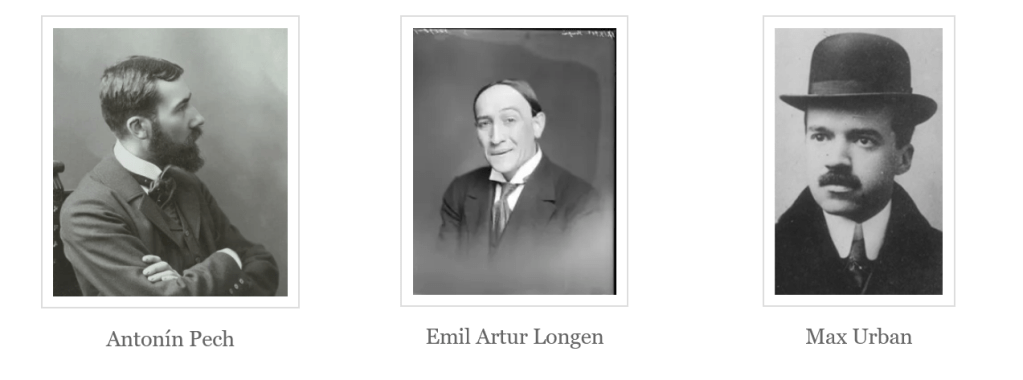
Early Czech cinema was shaped by multifaceted personalities who saw film as just one of many ways to express themselves and experiment. This is certainly true for both Emil Artur Longen and Antonín Pech, whom we will examine separately. Formally speaking, these films and filmmakers operated under the Austro-Hungarian Empire, since the Czechoslovak state was only born after World War I. Yet these were entirely local productions, and for this reason they are considered genuinely Czech.
Antonín Pech was born in 1874 and began his career as a photographer. In 1908 he opened the Gran Biograph de Paris cinema in Prague and, after dabbling in theater, began to consider making the leap into film. This happened in 1911 when he founded Kinofa and, attempting to imitate Max Linder’s success, introduced the character of Rudi—though it never achieved the hoped-for popularity. His career in film was, however, very short-lived and ended already in 1914. He died in Prague in 1928 at the age of 53, remaining nonetheless an important figure in the first wave of Czech film production.
Emil Artur Longen (born Pitterman in 1885) studied at the Academy of Fine Arts in Prague, but was expelled for disciplinary reasons before completing his studies. He pursued a truly multifaceted career, ranging from painting—where he was part of the Osma group alongside Emil Filla and my ancestor Bohumil Kubišta (who died of Spanish flu)—to Prague’s cabaret scene. After a flourishing theatrical career as a playwright, screenwriter, and actor, he briefly turned to film, creating the character of Rudi, a sort of Prague version of Max Linder, though again with limited success. On Emutofu we have seen him as an actor in Otrávené světlo (1921). He also wrote autobiographical novels, and once sound cinema arrived, he enjoyed a kind of second youth as a screenwriter, without ever fully abandoning theater or film.
Don’t miss at the end: Konec milování by Max Urban (1913).
– Ponrepo’s Illusionism (Ponrepovo kouzelníctví) – Antonín Pech (1911)
A very short film starring Viktor Ponrepo, a sort of Czech Méliès, illusionist and manager of Prague’s first permanent cinema. The short is set right inside his theater, featuring a series of tricks and magic acts—some successful, some less so.

– The Rudi Series (1911)
As mentioned above, in 1911—riding the wave of Max Linder’s success—Antonín Pech and Emil Artur Longen tried to introduce a wholly Czech comic character meant to anchor the new production company Kinefa. The Rudi series included four shorts from 1911, all starring Longen: Rudi na křtinách, Rudi na záletech, Rudi se žení, and Rudi sportsman. Only two of these have survived or are easily accessible today.
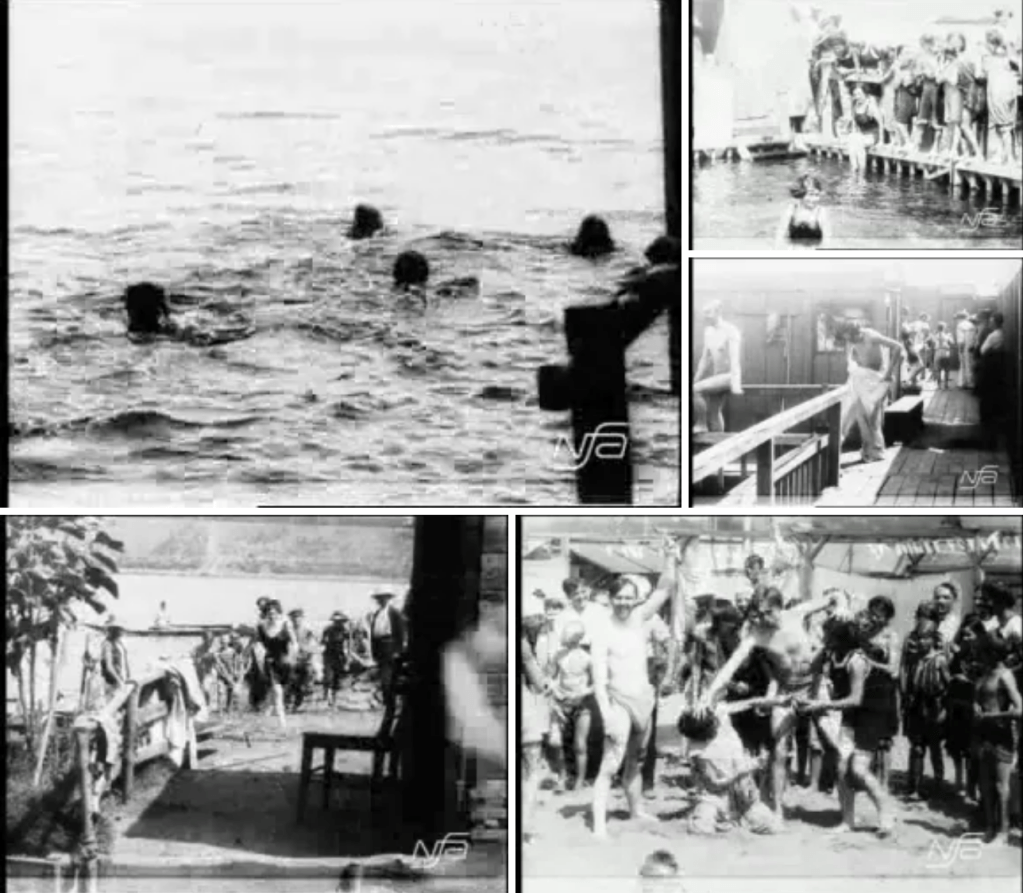
Rudi’s Philanderings (Rudi na záletech – dir. Emil Artur Longen & Antonín Pech, 1911): Rudi disguises himself as a woman to go swimming with some girls. He is soon discovered and beaten up.
Rudi sportsman (Rudi Sportman – dir. Emil Artur Longen, 1911): Rudi tries to prove himself a capable athlete, but fails miserably at various sports, ending up only with embarrassment and ridicule.
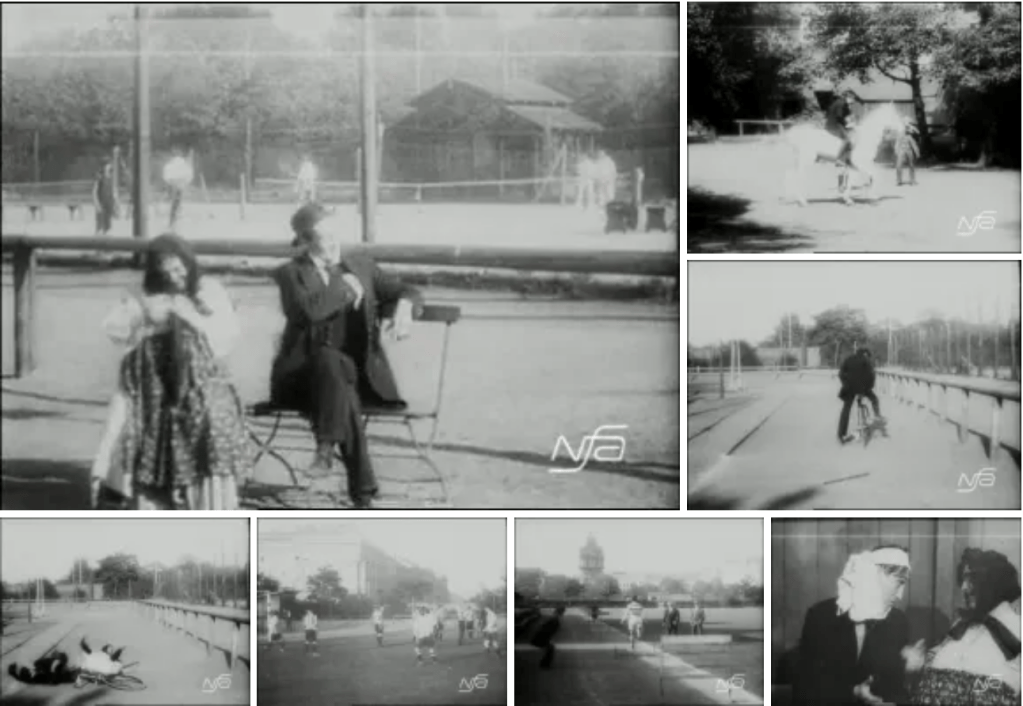
As you know, I’m not a big fan of silent comedies, and these are hardly remarkable or original. They must be understood in their local production context, made for a domestic audience, though their inspiration is clearly foreign.
– Rivals (Sokové) – Antonín Pech (1911)
I literally couldn’t make sense of it! Unfortunately, the film survives only in fragmentary form. From what I could see, it’s a western, but many shots are taken from very far away—perhaps to highlight the landscape—and the characters are nearly indistinguishable. To me, it seemed like an illogical alternation of captures and counter-captures, with even a girl at one point picking up a gun and threatening men left and right. Nearly unwatchable in its current condition. Still, it is interesting to see Antonín Pech experimenting with a genre so different from his usual comedies.

– A Tooth for a Tooth (Zub za zub AKA Pomsta je sladká) – Antonín Pech & Václav Piskáček (1913)
The most enjoyable of the films discussed here. Once again it’s a comedy, centered on a penniless couple: a young woman and her dentist husband. The girl longs for a new coat but has no money, so she devises a devilish plan. She lures men into her husband’s dental office where, caught red-handed, they are forced to pretend they need a tooth pulled and pay handsomely for the service. Later, the victims coincidentally meet outside the office, plot revenge, and storm upstairs to forcibly yank out all of the dentist’s teeth—one by one! A true case of “tooth for a tooth.”
The short lasts only a few minutes but is well-constructed. Among those seen so far, it’s the only one I actually recommend seeking out.

– The End of Loving (Konec milování) – Max Urban & Otakar Štáfl (1913)
Konec milování is something of a bonus in this article since it was directed by Max Urban and differs greatly in subject matter from the previous works. Like Pech and Longen, Urban was a fascinating figure of early Czech cinema, originally trained as an architect before turning to film, often collaborating with his wife Andula Sedláčková. Together they founded the ASUM production company, which produced 18 films before shutting down in 1914 due to financial troubles brought on by World War I. Of these, the only one to survive in its entirety is Konec milování. Urban’s most lasting legacy, however, was architectural: the Barrandov Studios, for which he received the Grand Prix at the 1937 Paris International Exposition of Art and Technology.
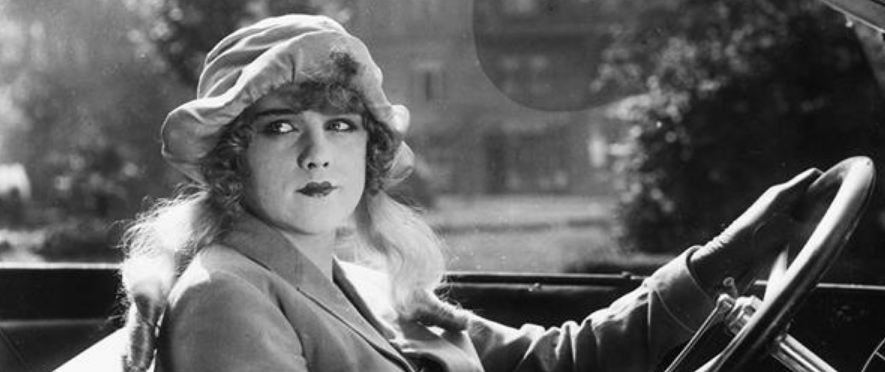
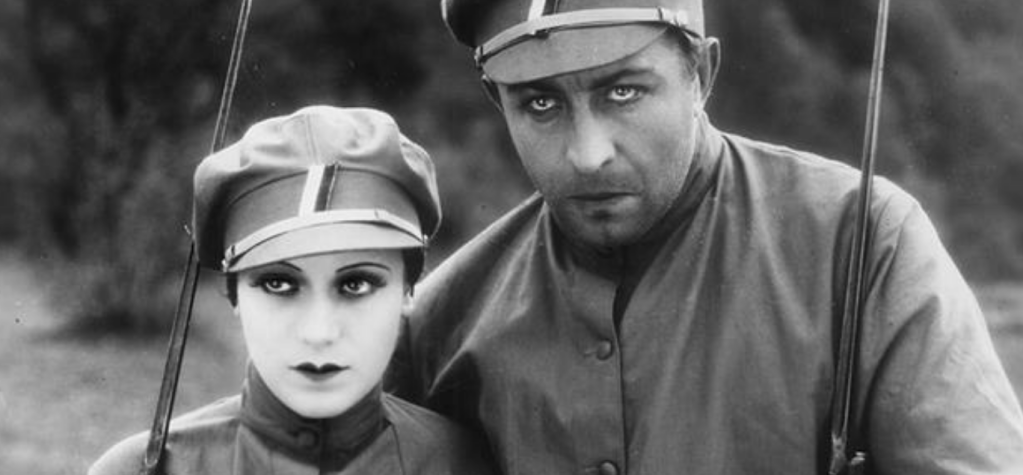
The film itself tells the tragic story of Fred (Miloš Vávra), who, despite having conquered Irena (Andula Sedláčková), also begins courting the beautiful Lolotta (Jarmila Kronbauerová). The affair is soon discovered by Irena, who, in a devastating finale, disguises herself as Fred’s chauffeur and drives a car carrying all three of them off a cliff.

Few silent films end on such a destructive, utterly tragic note—typically at least one of the three characters would survive (see Klovnen or The Beast). Here, however, there is no hope. In the final moments, Irena removes her cap, revealing her identity; Fred realizes in horror what is about to happen, but it is already too late. The last shot lingers on the lifeless bodies of the three, before fading to the word “The End.”
This article was originally published in Italian on emutofu.com



 Silent Film Era
Leave a comment