

At the 2018 Cinema Ritrovato, the two only films directed by the Czechoslovak filmmaker Olga Rautenkranzová (who later disappeared into obscurity) were presented. What became of her? We even asked Jeanne Pommeaux from the Národní filmový archiv, who couldn’t provide an answer, but we hope that future research will shed more light on this pioneer of Czech cinema.
– Satyr (Kozlonoh) – Olga Rautenkranzová (1918)
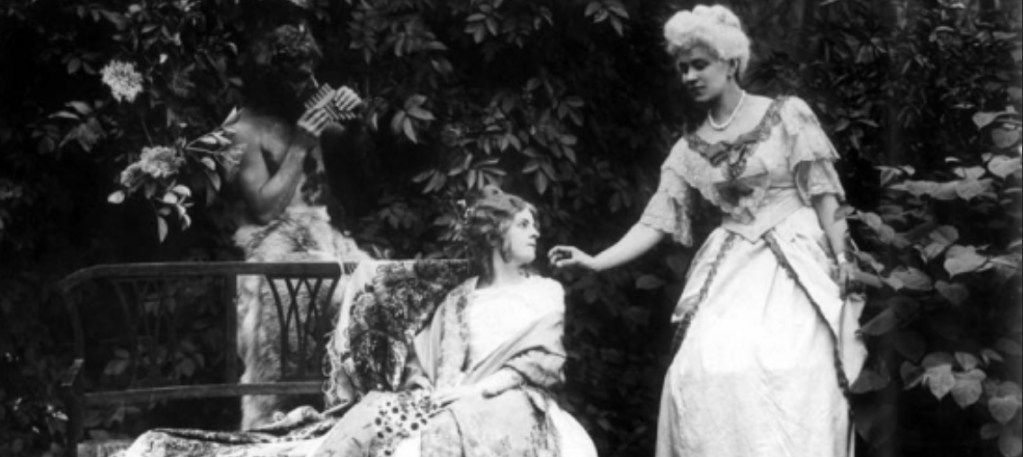
Kozlonoh is a short film shown at Cinema Ritrovato 2018. A young countess (played by Olga Rautenkranzová) dreams of true love. Wandering through the garden, she sits on a bench near a statue of Pan. Sensing the girl’s longing, the statue comes to life and promises to fulfill her desire—but only on the condition that he share in their moments of happiness.
Felix (Oldřich Kminek) soon arrives at court and falls in love with the young woman. Unfortunately, every time the two are together, Pan intrudes—though, curiously, only she can see him. Why? Of course, it is all a dream. Yet sometimes reality surpasses fantasy: Felix does indeed arrive at the castle and genuinely falls in love with the countess, this time without mythological interference.
The story of Kozlonoh is extremely simple yet well executed, enriched by the intrusion of a classical element which, as a classicist, struck me positively. It is a charming appetizer before the more complex Učitel orientálních jazyků.
– The Oriental Languages’ Teacher (Učitel orientálních jazyků) – Olga Rautenkranzová & Jan S. Kolár (1918)
Učitel orientálních jazyků is the second and final film by Olga Rautenkranzová, co-directed with the better-known Jan Kolár. It is a light and entertaining comedy with an “Oriental” theme. The characters are well designed, and the gags not overly predictable.
Sylvia (Olga Rautenkranzová), daughter of Count Chuarez (Josef Rovenský), is a voracious reader. One day, while visiting the local library, she meets the handsome professor of Turkish, d’Algeri (Quido del Noce). The young woman, under the pretext of wanting to learn Ottoman, enrolls in his course and masters the language in no time.
When d’Algeri asks the Count for Sylvia’s hand, he refuses, claiming the professor lacks the wealth to satisfy his daughter’s whims. A twist follows: the Count is offered the role of ambassador in Constantinople (sic!), but only on the condition that he learn the language. Reluctantly, he begins lessons with his daughter’s suitor. To encourage his progress, Sylvia disguises herself as an odalisque and seduces her father while secretly teaching him. The trick is soon revealed, but the Count’s anger dissipates when he learns he has been awarded the position he desired. In a burst of good humor, he consents to the marriage of his daughter and the professor.
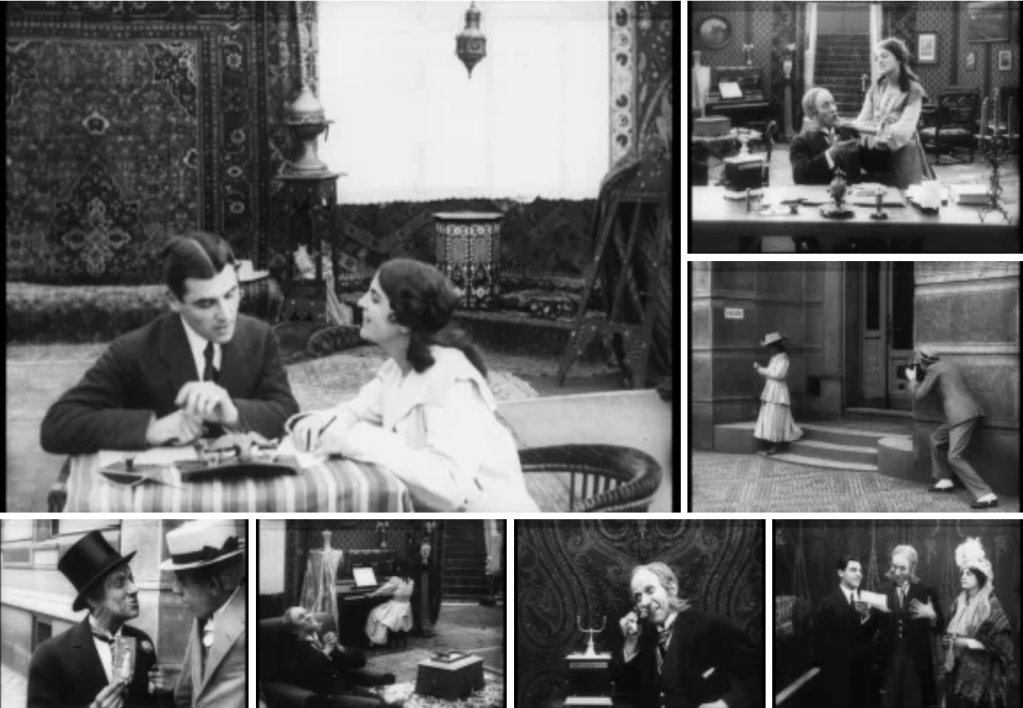
Although a bit eccentric, the film is truly enjoyable. Among its many absurdities is the idea that one could master a complex language like Turkish in just a few days—a notion that drew laughter from the audience! There is also a superfluous subplot in which Mr. Pepperstein (Eman Ferenc Futurista), a member of the anti-feminist club, falls for Sylvia after seeing her leave d’Algeri’s study. He begins following her and even snaps a photo of her in secret, creating rather avoidable gags. Fortunately, these scenes don’t drag on for too long. The other characters, however, are very well crafted, and Rautenkranzová herself is absolutely sparkling in the role of the faux odalisque.
It’s a pity her career was so brief!
This article was originally published in Italian on emutofu.com




 Silent Film Era
Leave a comment