

Czech silent cinema offers a fascinating variety of themes and styles. In today’s article, we’ll look at two very different films, both bound together by tangled tales of love. The first, Setřelé písmo, is a mystery with hints of the esoteric, featuring a very young Anny Ondra. The second, Ukřižovaná, dives into a harrowing historical drama about an act of brutal violence against a Jewish woman during a pogrom.
– The Missing Letters (Setřelé písmo) – Josef Rovenský (1921)
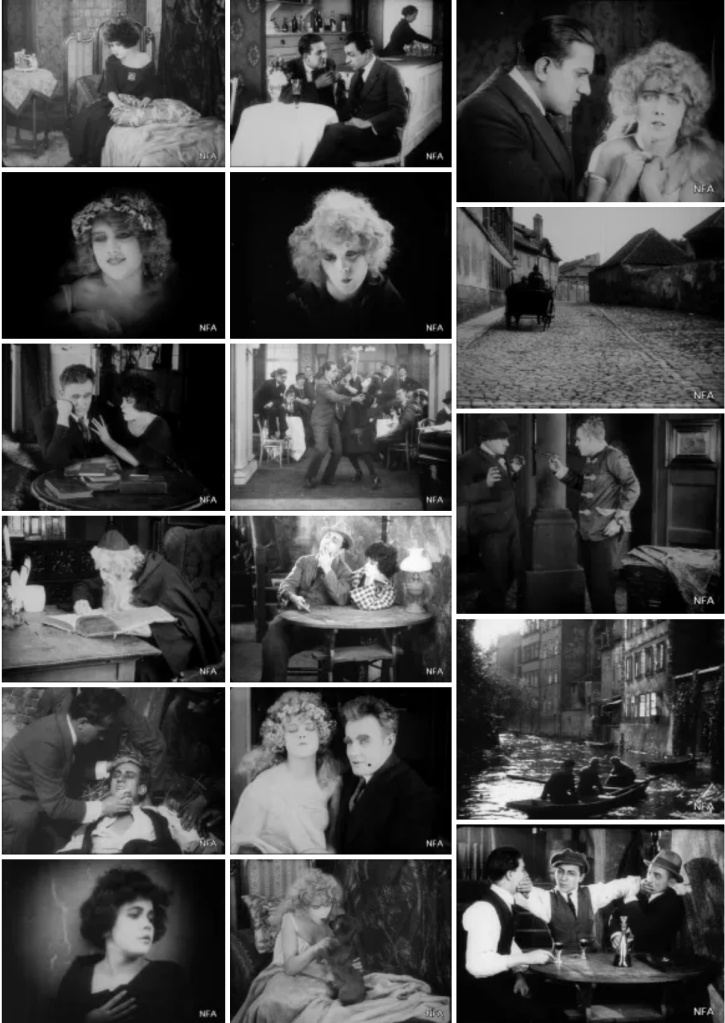
Šalda (Karel Lamač) is a sculptor and collector of old manuscripts. One day, he stumbles across a medieval text that contains a map leading to an ancient treasure — though part of it is missing and held in a museum. He shares the secret with his lover and model Olga (Hana Jenčíková). When he dismisses her to bring in a new model, Enna (Anny Ondráková), Olga takes her revenge by revealing what she knows to the gangster Greeman (Joe Jenčík).
Meanwhile, Randa (Josef Rovenský), an unemployed sculptor, is hired by Šalda and introduces him to Enna. A rivalry develops between the two men, with Šalda even attempting to hypnotize the young woman. Randa is tasked with stealing the missing manuscript page from the museum — but instead of going along with the crime, he alerts the police. The heist is foiled, Olga accidentally kills Šalda during a struggle, and Randa and Enna are finally free to be together.
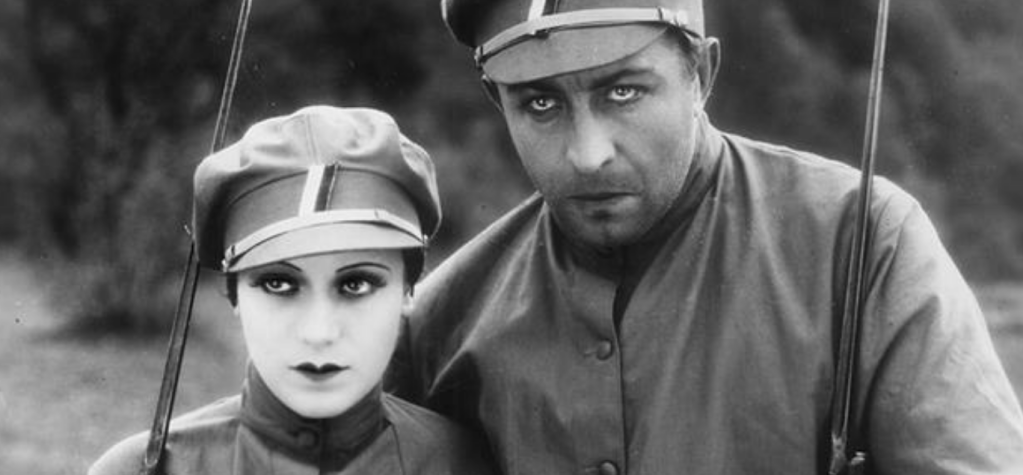
The film is engaging, though it tries to combine too many influences at once: the esoteric manuscript, hypnosis, gangsters, underworld dance halls, espionage, and mystery. The result is sometimes uneven, with characters lacking real depth and certain narrative twists feeling forced. Visually, the film relies heavily on close-ups, some of which feel unnecessary — particularly those of Anny Ondra, used more for effect than storytelling.
– The Crucified (Ukřižovaná) – Boris Orlický (1921)
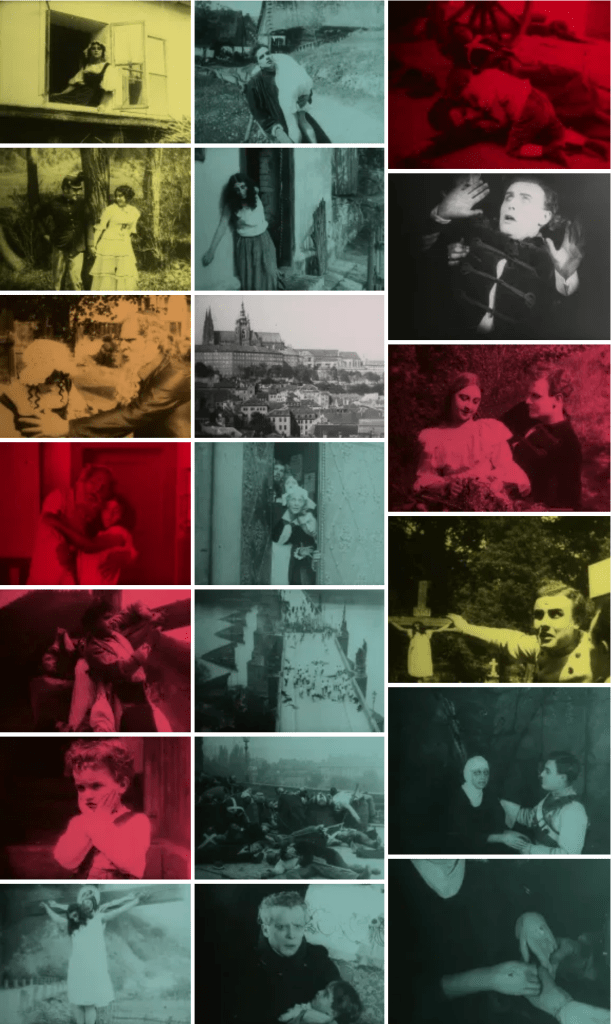
Karel Vyšín (Karel Lamač), a soldier, falls in love with Ruth (Nataša Cyganková), a young Polish Jew. In 1846, during a pogrom in Tarnów, Ruth is seized and crucified alive, while her son Jan (Miloušek Gröschel) is brutally beaten. Both are rescued by Father Xaver Schneider (Přemysl Pražský), a priest secretly in love with Ruth who had tried to stop the attackers. The child is returned to his father, but Ruth, traumatized, disappears without a trace.
By 1848, Prague rises in revolution, and Vyšín is killed. Years later, Jan (again Karel Lamač) grows up to be one of Father Schneider’s students. He remains haunted by the image of the crucifix, a constant reminder of his mother’s fate. Tormented by these visions, he flees to the countryside, where he meets another young woman named Ruth (again Cyganková). He vows to marry her only once he uncovers what happened to his mother.
The chance comes in 1866, when Jan enlists in the Austro-Prussian War. He discovers that his mother is alive, hidden away in a monastery, and promises to return to her after the conflict. But during the Battle of Mnichovo Hradiště, Jan is fatally wounded, his crucifixion visions returning in his final moments — until he is reunited with his mother. With this reconciliation, he can finally rest, and Ruth becomes free to begin their life together.
Ukřižovaná is far more striking than Setřelé písmo, not least because of its unusual and disturbing subject matter. Inspired by a novel by Czech writer Jakub Arbes, it blends real historical events with the personal tragedy of a young Jewish man traumatized by the violent death of his mother. Even today, it is rare to see films depicting pogroms — or crucifixion — and to encounter them so starkly in a silent film is shocking. The story is unflinching, filled with scenes of death, executions, and brutality. For all its narrative and technical flaws, it remains a work that does not leave the viewer indifferent.
This article was originally published in Italian on emutofu.com



 Silent Film Era
Leave a comment