
Mystery and action — these are the driving forces of Otrávené světlo. In fact, it might be the third film to unite two of my long-standing threads: Czechoslovak cinema and early science fiction. After Melchiad Koloman (1920) and Pancéřové auto (1930), we can already see a fertile silent-era subgenre emerging: the story of a pseudo-scientific invention which, if it falls into the wrong hands, could endanger everyone. Admittedly, the “invention” here is a little eccentric, and it’s hard to imagine exactly how it might function as a weapon.
Dr. Oskar Grant (Karel Fiala) has discovered a way to extend daylight illumination across the entire day. His creation is considered highly dangerous, so the Association of Industrialists sends Dr. Selín (Jindřich Lhoták) to purchase and secure it. But others have designs on Grant’s work: the magician Durk (Emil Artur Longen), together with his accomplices Martin Balek (Přemysl Pražský) and Ferdinand Karban (Jan S. Kolár), infiltrates Grant’s home under the guise of performing at the birthday party of Grant’s daughter, Anny (Anny Ondráková). Their true aim is theft. Yet it is Anny herself — with the help of engineer Milan Bell (Karel Lamač) and reporter Hynek (Václav Pražský) — who ultimately thwarts the gang after a series of perilous adventures.

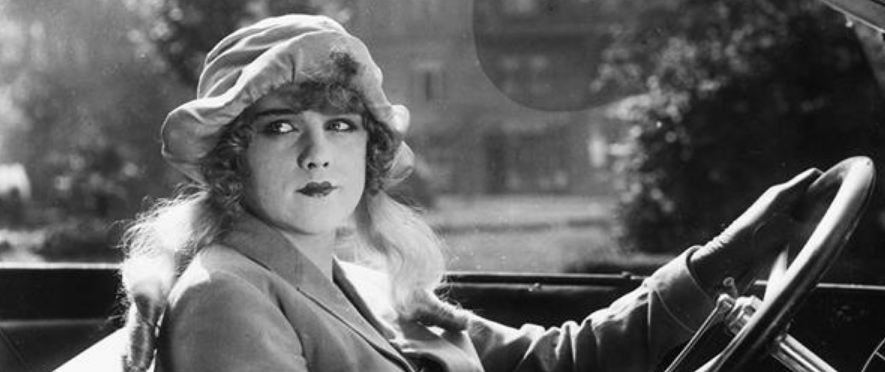
The film clearly borrows from the popular adventure serials that flourished in Europe and especially in America. This influence is evident not only in the narrative full of chases, twists, and lively characters, but also in the use of “Anglo-sounding” names for its protagonists. Perhaps the most compelling character is Anny: an unusually independent young woman for her time. She drives, runs, shoots — and never hesitates to take risks. Female characters in Jan S. Kolár’s films, in fact, are often modern and multidimensional, and Anny is no exception.
The villain Durk, while his motives remain somewhat vague, is also very effective. Making him an illusionist enhances his mystique, and the film even gives him a backstory: his real name is Darken, and he was supposedly imprisoned in Karsk. He escaped by staging an accident and replacing himself with his cognitively impaired brother (a detail handled in a way that today would certainly raise eyebrows). His chosen weapon is both imaginative and bizarre — a lightbulb filled with poison, which, after glowing for several minutes, bursts to release a deadly gas. One particularly striking scene shows Milan tied up in front of the glowing bulb, a sandglass marking the seconds until his death… only for a last-second hand to switch off the lamp, deus ex machina style.

At just one hour in length, Otrávené světlo manages to feel varied and substantial, with every element fitting neatly into place. I had long delayed watching it because my expectations were high — and I must say, they were fully met. I strongly recommend seeking out the DVD release, which also includes Příchozí z temnot, another cornerstone of Czech silent cinema. Both films are available with English subtitles.
This article was originally published in Italian on emutofu.com



 Silent Film Era
Leave a comment