

Also known as Sherlock Holmes II, this comedy borrows some of the playful tone of German films of the period — with Lubitsch as their undisputed master — but filters it through a distinctly local flavor, not always to its advantage. As often happened in “peripheral” film industries, the impression is that elements were thrown together rather randomly to ride on the success of certain trends. The addition of a bumbling “Sherlock Holmes II” is one such example — though, as we’ve seen, Czech cinema had already poked fun at the character with Dáma s malou nožkou (1920). The two films share another point of contact: their casts. Here, once again, Anny Ondra (Ondráková) stars alongside her husband, Karel Lamač.
The story centers on Daisy (Anny Ondráková), daughter of banker C. W. Fux (Adi Berger), who is tired of being treated like a child and longs for romance. Her friend Maud Gouldová (Bronislava Livia), once accustomed to a glamorous social life, has suddenly fallen into poverty. Daisy decides to place a newspaper ad declaring herself a millionaire seeking a millionaire suitor. Among the replies are the now-bankrupt Tom Darey (Karel Lamač) and Daisy’s own father. From here, a convoluted scheme unfolds: Daisy tries to pair her father with Maud while pursuing Tom herself. Into this mix blunders Sherlock Holmes II (Eman Fiala), hired by the two men to track down the elusive women. Add in Tom’s debts to Daisy’s father, a madhouse subplot, and a series of comic misunderstandings — and you can probably guess the ending: love conquers all, with both couples happily united.

The film is genuinely funny, even if at times unnecessarily complicated, and the Holmes gimmick feels like a last-minute addition. Still, the Ondra–Lamač pairing works beautifully, and Anton’s direction is polished, matched by excellent cinematography. I’m often struck by the level of craftsmanship in Czech films of the 1920s, which drew inspiration from German comedies, as well as Soviet, Swedish, and Italian cinema. If you’ve seen the Lubitsch in Berlin box set from Eureka’s Masters of Cinema series, the similarities are hard to miss: witty, independent female characters, a surprising degree of sensuality, and plenty of absurd, caricatured situations. The characters are all essentially stereotypes, yet they work, keeping the film lively and entertaining. Visually, the compositions are striking, particularly in scenes filled with multiple elements.

Karel Anton remains one of my favorite Czech directors, even if I think he reached his peak with Tonka Šibenice (1930). As I noted with Cikáni (1921) — a film I didn’t particularly enjoy — Anton’s eye for landscapes and visual detail always stands out.

– The Robber (Lupič) – Anonymous (1927)
And to close, here’s a curious little gem: a short advertising film with a comic twist.
A young couple (the man played by Jiří Hron) are enjoying a romantic moment in a meadow when a thief appears and robs them, leaving them literally in their underwear. But then he notices a peculiar ticket… What could it be? None other than the much-coveted cinema ticket for The Lovers of an Old Criminal (Milenky starého kriminálníka, 1927, dir. Svatopluk Innemann) — a film we’ve already covered on this site.
Abandoning all the valuables he has just stolen, the thief runs off in delight to the cinema, clutching the ticket, while the poor couple are left in despair.
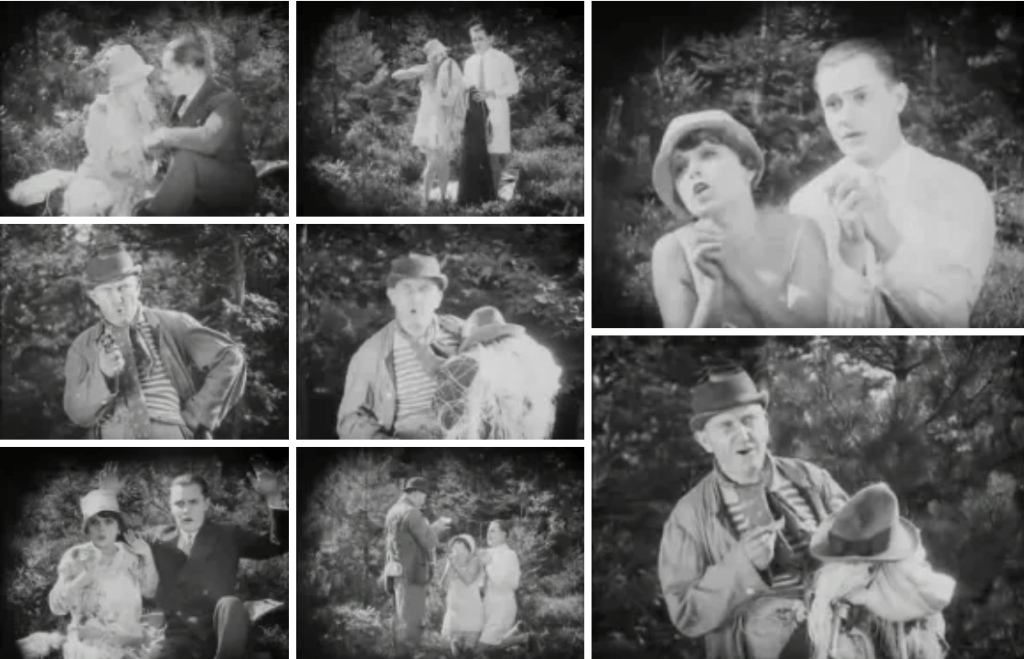
And you? What are you waiting for? If you haven’t already, go track down Milenky starého kriminálníka!
This article was originally published in Italian on emutofu.com


 Silent Film Era
Leave a comment