

Anyone who knows me is aware that when I tackle a project, I tend to proceed chronologically, to get a sense of the evolution of an artist — or, in this case, of a national cinema. Falešná kočička is the first Czech silent comedy that genuinely entertained me, despite the fact that I’m not usually fond of the genre in its silent form. Produced by Oceanfilm, it was the first of three comedies based on stories by Josef Skružný, all starring Vlasta Burian and Zdena Kavková, and directed by Svatopluk Innemann. The cycle also included Lásky Kačenky Strnadové (1926) and Milenky starého kriminálníka (1927). What makes this debut entry stand out is not just its freshness but also its dynamism, with lively pacing and inventive camerawork that follows parades and chase scenes with unusual mobility for the time.
Dr. Karel Verner (Karel Hašler) is determined to marry but finds the women of his own social class unbearable. His solution? To pick a bride from among the common folk and educate her according to his standards. His first two attempts go disastrously wrong: one young woman steals his silverware, the other brings her entire Roma family into his house. Meanwhile, Milča Janotová (Zdena Kavková), a young bourgeois woman, decides to play a prank. With the help of her tipsy accomplice Vendelín Pleticha (Vlasta Burian), she ventures into the slums to learn the manners of street girls. She soon presents herself to Verner as a suitable candidate, aided by her former nanny Amálka (Antonie Nedošinská), now working as the doctor’s housekeeper. Verner hires a teacher (played by Innemann himself) to educate her, but eventually takes over the lessons himself — and inevitably, the two grow close. Neglecting his patients, Verner is smitten.

The prank is supposed to end when Vendelín, pretending to be Milča’s father, comes to retrieve her. But after getting him drunk, Verner asks for Milča’s hand in marriage and even offers money. Overjoyed, Vendelín agrees. The deception unravels when one of Milča’s friends visits Verner for dental treatment and reveals the truth. Feeling betrayed, he repudiates Milča, who collapses into a deathly delirium. On her supposed deathbed, Verner is moved to forgive her, and they reconcile. Meanwhile, Vendelín is reunited with Amálka, the sweetheart he lost to drink, and the two couples marry in a double wedding. The story is clearly indebted to George Bernard Shaw’s Pygmalion (1913), though stripped of its social critique and given a happy ending that mocks the notion of a “respectable” man remaking a woman of lower class into his bride.
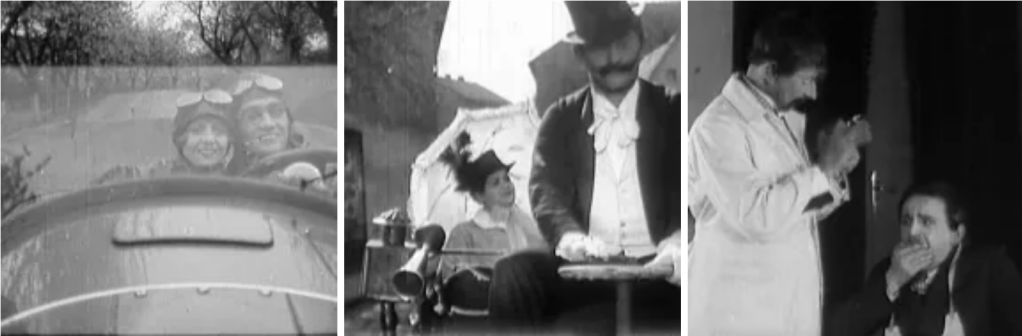
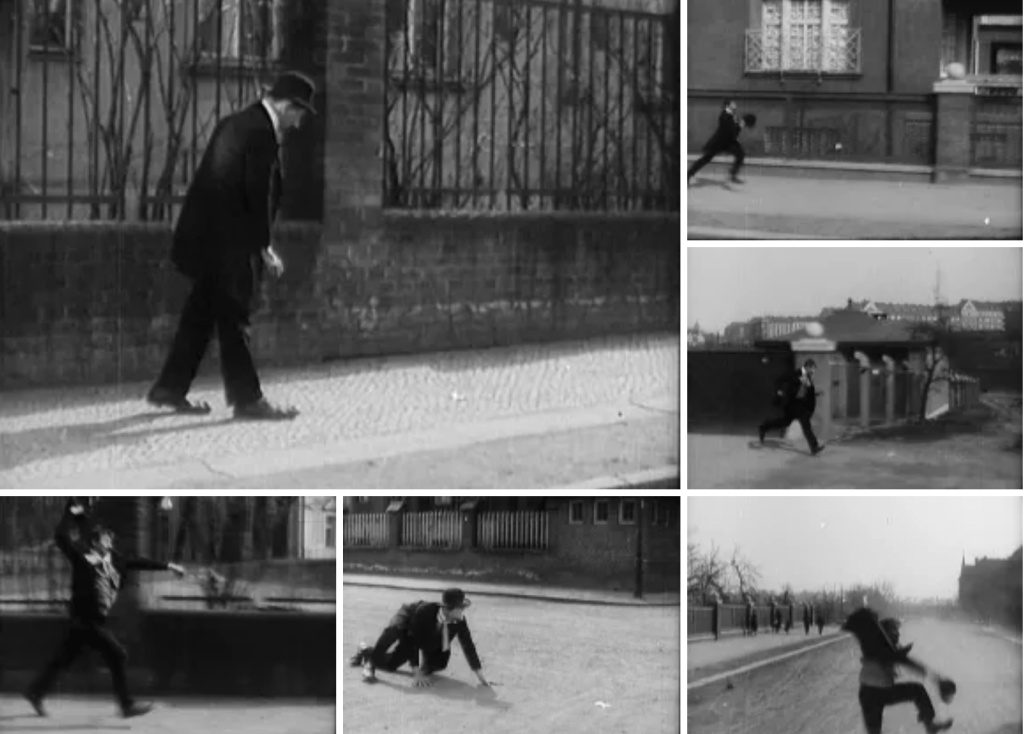
One of the funniest sequences features Vendelín, drunk, impersonating a dentist when summoned by one of Verner’s patients. He yanks out the wrong tooth, shrugs off the complaint, and promptly pulls another, sending the poor man into a faint. It’s hardly groundbreaking material, but the timing, facial expressions, and physicality make it genuinely amusing. The camerawork also deserves praise: for instance, a sequence where Vendelín chases after a scrap of paper with Verner’s address showcases the film’s energetic sense of movement.
If you’re curious, the Czech DVD edition is available, and English subtitles can be found online.
This article was originally published in Italian on emutofu.com




 Silent Film Era
Leave a comment