

We’ve already touched on a part of Blednoucí romance (1958) when we began the project dedicated to Czech and Slovak silent cinema with Song of Life (Píseň života, 1924). To understand the importance of this film, one must consider the post-war context: many films had been destroyed during the conflict, with only fragments surviving from alternative copies. The director of these three films, Miroslav Josef Krňanský, decided to salvage what he could by creating a new film in three parts, condensing each story to about 20–30 minutes. Considering the source material, the result is truly remarkable, and all three stories are engaging. We’ve already discussed the first episode; today, we’ll focus on the remaining two.
– The Story of One Day(Příběh jednoho dne) – Miroslav J. Krňanský (1926)
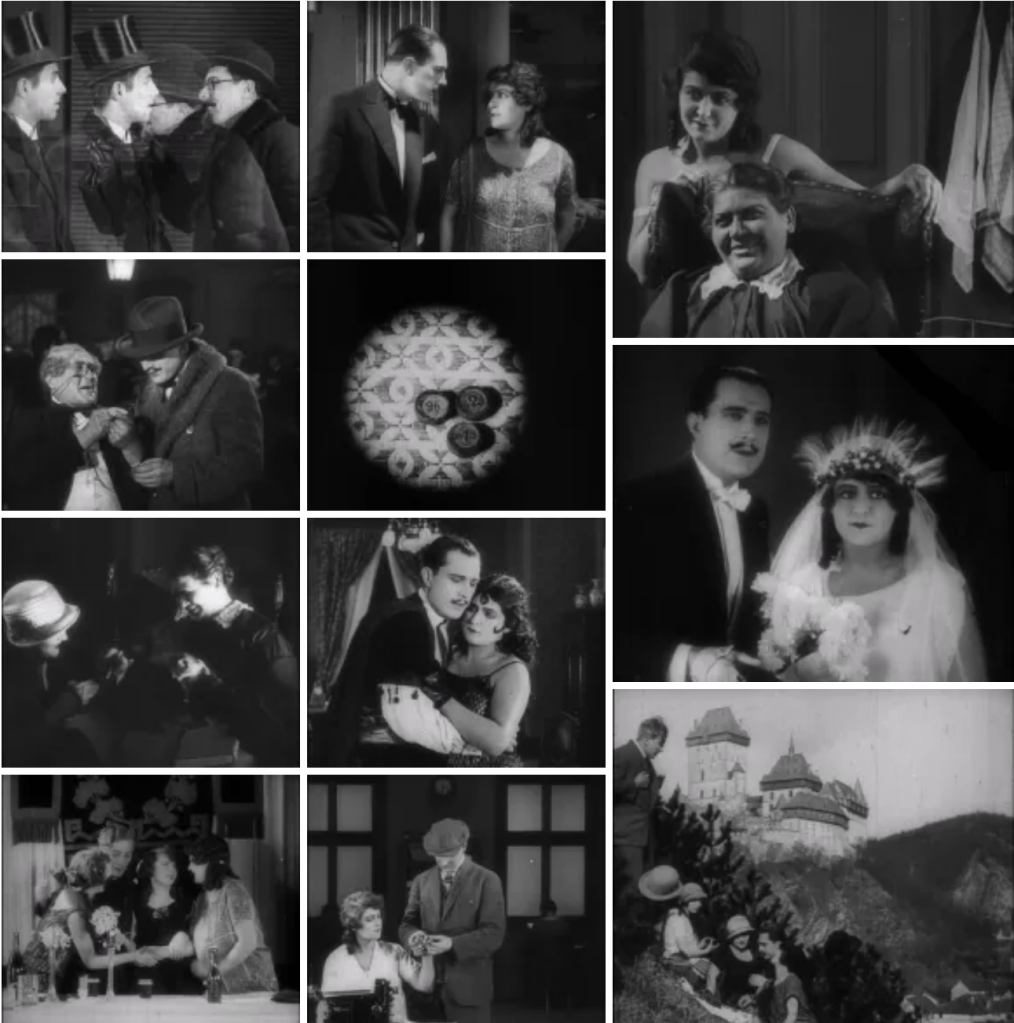
Julča (Mary Jansová) lives in a working-class household with her ailing mother, Mrs. Břežanská (Antonie Nedošinská), who, widowed and ill, dreams of seeing her daughter married. Despite advances from her employer that could improve her situation, Julča refuses, seeking true love instead. This seems to arrive when the young Fráňa Kratina (Lexa Jarošín) courts her. They fall in love, yet Fráňa increasingly struggles with the difficult conditions in which Julča lives. One day, they quarrel, and Julča decides to leave him. Fortunately, Fráňa reconsiders and apologizes for his behavior. Shortly afterward, the couple marries.
The film interestingly explores class differences: Julča inhabits a working-class neighborhood, characterized by nosy neighbors, while Fráňa comes from a more bourgeois environment. Can love overcome these barriers? Unlike Píseň života, which ended tragically, this story has a positive resolution. The original breakup scene was likely longer and more complex, but here it concludes in just a few minutes, yet the film remains enjoyable. Special mention goes to Julča’s mother, who conveys endless tenderness.
The cinematography is careful and attentive, focusing on characters’ faces and small details deemed important by the director. The opening is especially charming, showing scenes through the eyes of a drunk character, including absurd or double-vision perspectives.
– The Mire of Prague (Bahno Prahy) – Miroslav J. Krňanský (1927)
At the “Velonosa Cabin,” various outcasts and forgotten members of society gather. Among them is Václav Tatar (Joe Jenčík), who, between drinks, begins a relationship with Lenka (Bronislava Livia), daughter of Mr. Rákosník, the innkeeper. Her brother Petr (L. H. Struna) is a criminal and one day ambushes Václav, robbing him. One evening, under the watchful eyes of their father (Karel Schleichert), a brawl erupts, resulting in Petr’s death. Václav is imprisoned but eventually released, realizing how important Lenka is to him.
This film is well-executed despite its brevity, though it suffers slightly from being a mutilated copy. Some narrative transitions are unclear, yet the inn—the “poisoned cabin,” populated by prostitutes and alcoholics—is vividly depicted without overly distracting the viewer. Among the characters stands out a “Carmen”-type woman, dressed as the famous character, who sells herself to patrons. The film is explicit, yet retains a certain restraint and includes moments of extreme violence. Once again, the cinematography is careful and detailed, while the sets remain minimalistic, consistent with the other two chapters.

This article was originally published in Italian on emutofu.com



 Silent Film Era
Leave a comment