

The very title Chudá holka (“Poor Girl”) already hints at the genre and storyline and you would not be mistaken. Based on the novel of the same name by Václav Čech-Stráň, the plot is rather conventional and heavily influenced by foreign—particularly Russian—literature. Fortunately, Martin Frič’s direction elevates the material: through tight editing and an eye for key moments, he manages to make even such an unoriginal story engaging.
Maria Růžová (Suzanne Marwille) is an orphan taken in by a poor family. From an early age she is used to household chores. She harbors a secret: she is in love with her foster brother Klement (Otto Rubík), a handsome and talented young man soon to begin his professional career in Prague. When their relationship is discovered, Maria flees to the capital in shame. There she falls under the wing of Alois Mokráček (Josef Rovenský), a ruthless man who robs her and then employs her in his tavern, posing as a benefactor. His true nature soon becomes clear when he “sells” her to architect Robert Jánský (Jan W. Speerger), a regular at the tavern who has taken an interest in her. Maria resists his assault and later attempts suicide by throwing herself into the Vltava River. By chance, she is brought into the home of her real mother, Mrs. Rivolová (Božena Svobodová), who recognizes her but says nothing, keeping her close. This arouses the jealousy of Věra (Ela Poznerová), her acknowledged daughter. In a cruel twist of fate, Věra’s husband turns out to be none other than the predatory architect, who again tries to abuse Maria but is killed by a gunshot. Maria is accused of the murder, and Klement defends her. During the trial, Mrs. Rivolová finally reveals Maria’s true parentage, and Věra, in order to save her sister from prison, falsely confesses to the crime. In the end, Klement and Maria can marry without fear.
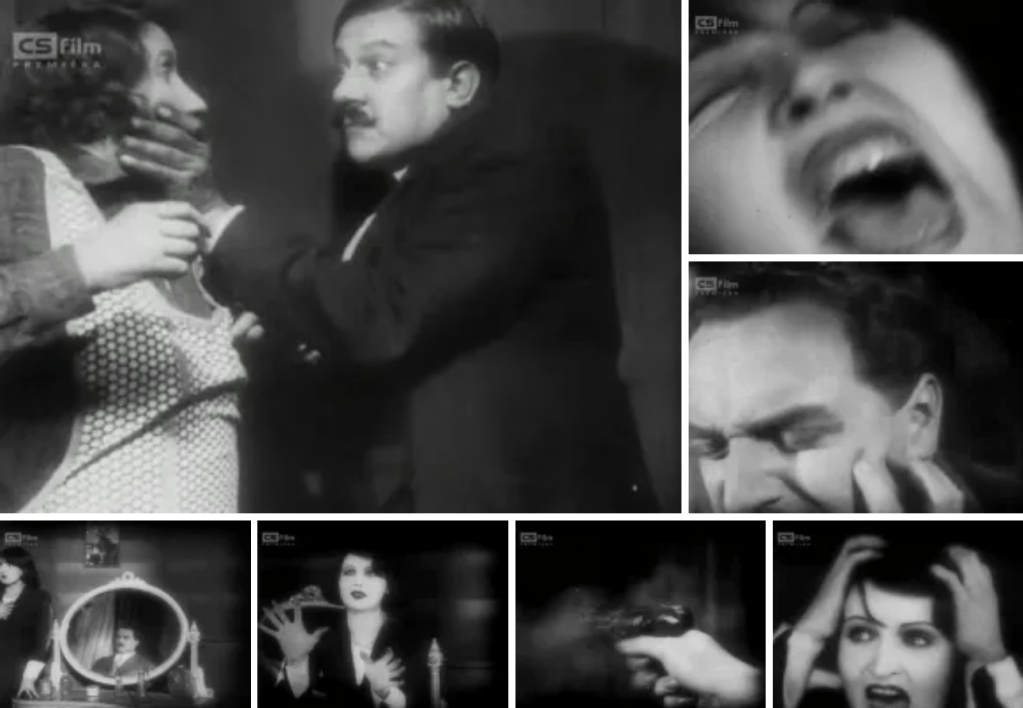
As you can see, the story is a patchwork of clichés and melodramatic devices, lifted mainly by Frič’s editing and direction. Suzanne Marwille—Frič’s wife—fits well in the role of the poor girl battered by fate, but her character undergoes no psychological growth and, like the others, remains rather flat and underdeveloped. Even at the end, when everything is resolved, Maria is still portrayed as a naïve young girl whose lack of agency leaves her vulnerable to misfortune. The poster (top right) is particularly striking, showing Maria struggling against a hostile city that grotesquely takes on the features of her tormentor.
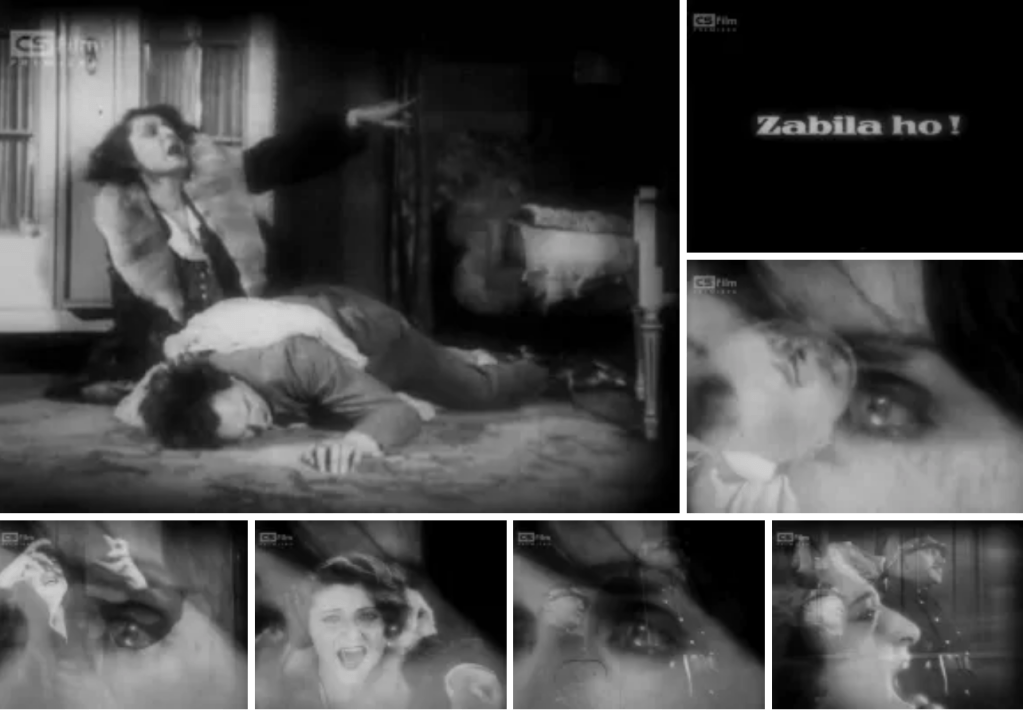
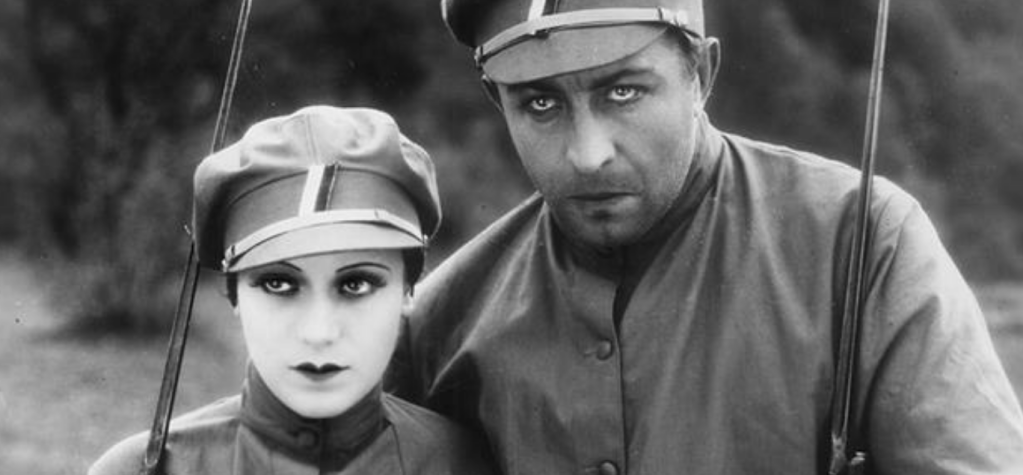
The most effective scenes are the two attempted assaults (combined into a single mosaic in the first set of stills above) and, above all, the sequence where Maria is accused by Věra and subsequently arrested: here the unfolding events are superimposed on Maria’s fixed, catatonic gaze.
Despite its well-worn premise, Chudá holka delivers a solid, tightly constructed drama characterized by Frič’s competent direction. For those who enjoy classic melodramas of this type, it is a fine example of the genre.
This article was originally published in Italian on emutofu.com




 Silent Film Era
Leave a comment