

In this article, we take a journey from the capital, Prague, to the more remote areas of today’s Czech Republic and Slovakia, guided by the sensitivity of Svatopluk Innemann, already familiar to us through this project, and Karel Plicka. At the end, you’ll also find a fascinating little experimental bonus.
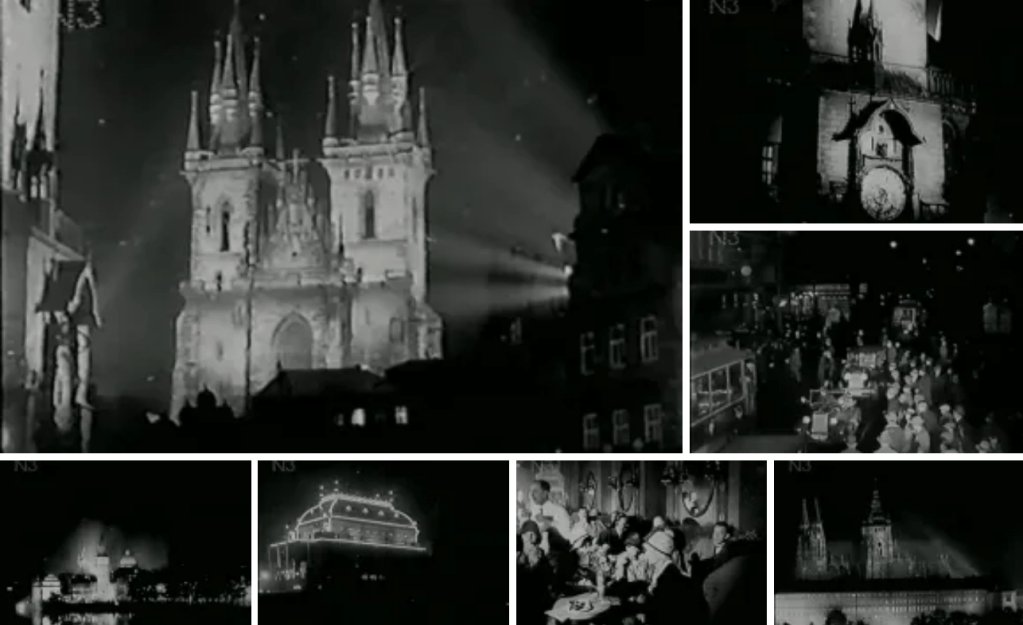
– Prague at Night (Praha v záři světel) – Svatopluk Innemann (1928)
With this documentary, Innemann captures a city in full economic growth: constantly moving, brimming with people, cars, and shops. Amid this bustling stream of life and professions, the film pauses now and then on striking images of Prague’s iconic monuments—the “golden city” that, then as now, leaves viewers in awe. As with many such works, the documentary is an invaluable record, allowing us to see how Prague has transformed over the past century while freezing it in one specific moment of its history.
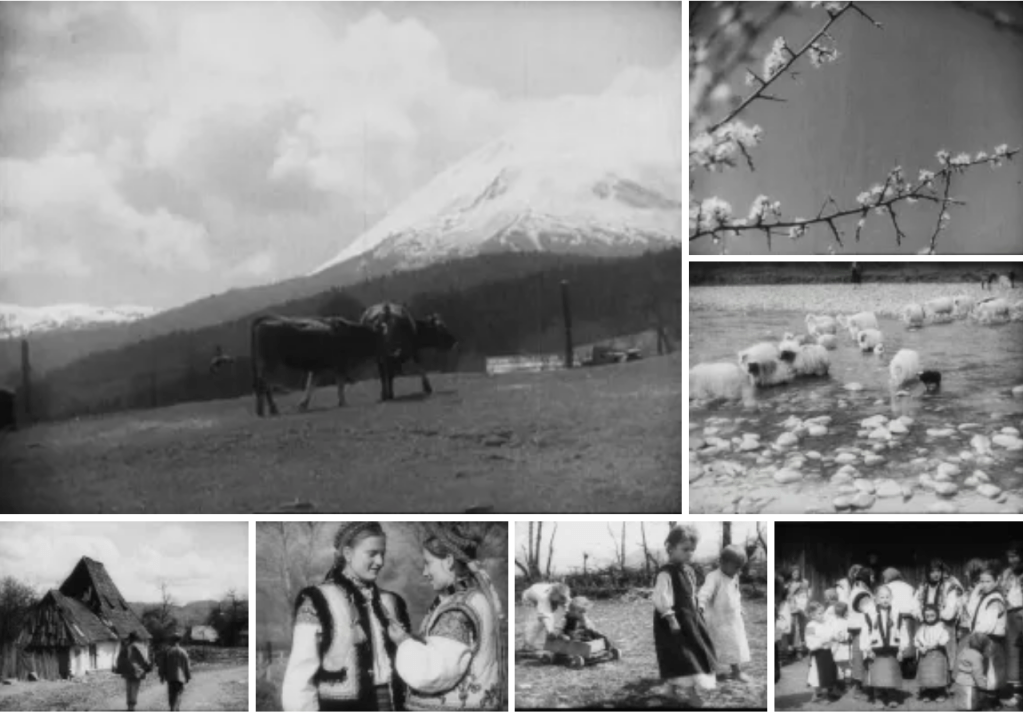
– Spring in Subcarpathian Ruthenia (Jaro na Podkarpatské Rusi) – Karel Plicka (1929)
This short ethnographic film introduces us to Czech Subcarpathian Ruthenia, home to people deeply tied to their mountainous land, their traditions, and their strong religious faith. We glimpse their characteristic houses, folk costumes, and traditional celebrations. A delightful and engaging piece and its brevity only adds to its charm.
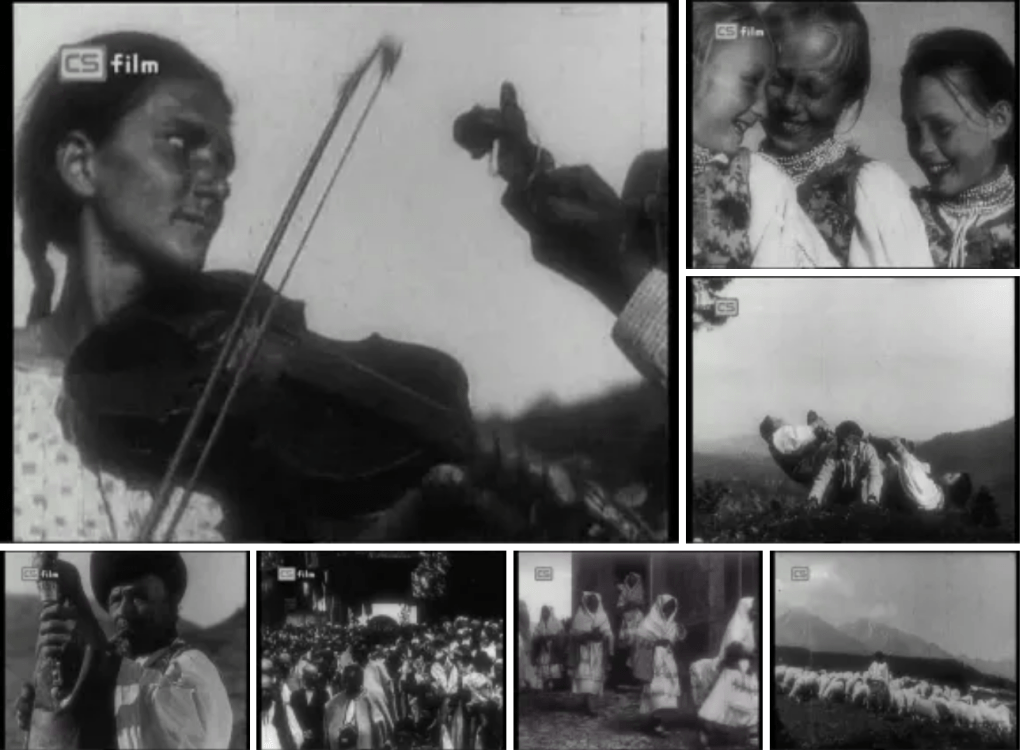
– Over Mountains, Over Valleys (Po horách, po dolách) – Karel Plicka (1929)
Presented at the very first Venice Biennale, this longer documentary portrays life in Slovak villages, focusing especially on dances and traditional attire. At nearly an hour, it is by far the longest of the three and, in my opinion, also the most repetitive and at times tedious. A shame, because the joy of life shining through the people on screen—especially children and young people—can be genuinely contagious. The film carries a touch of nostalgia for a bygone world, one that perhaps seemed simpler and more innocent.
– Aimless Walk (Bezúčelná procházka) – Alexander Hackenschmied (1930)
This short experimental film by Alexander Hackenschmied (also known as Hammid) is a classic example of a “city symphony,” Vertov-inspired and akin to many other European experimental works of the era—for instance Regen, which we’ve already covered here. The camera follows a protagonist on an aimless walk, pausing on everyday details and revealing new perspectives on ordinary reality. Highly recommended! You can watch the film below:
This article was originally published in Italian on emutofu.com





 Silent Film Era
Leave a comment