
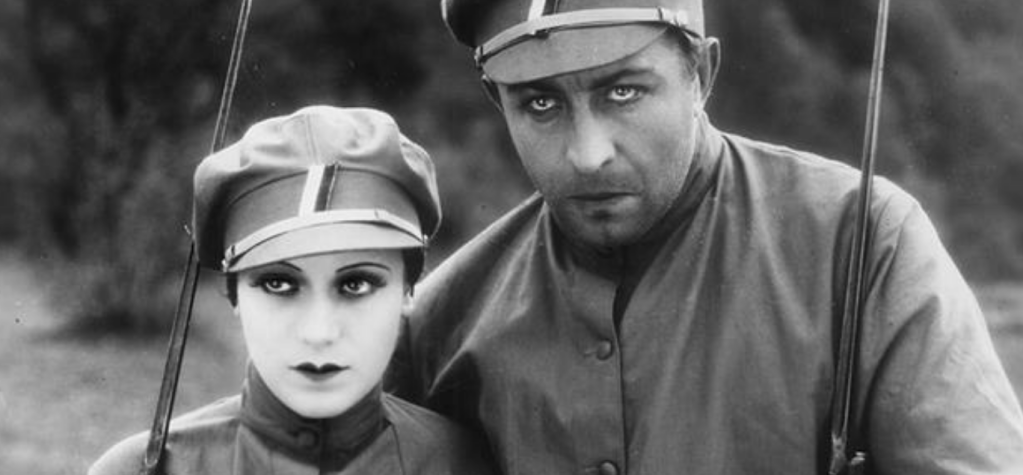
Earlier this week I wrote about the propagandistic Za československý stát (1928), a film centered on the Czechoslovak Legion. Today’s title, Plukovník Švec, covers similar ground but is far more accomplished—better structured, more mature, and simply more compelling to watch. Directed by Svatopluk Innemann and based on the play by Rudolf Medek (a writer, poet, and former legionnaire himself), the film dramatizes the Czech troops’ desperate struggle in Russia in 1917, as the revolution reshaped their fate.
When the Bolsheviks seized power, the Czechoslovak Legion had been promised safe passage to Vladivostok, from where they could sail on to continue their fight. But suddenly the order came down: they were to disarm and join the Red Army. Refusing, the legion took up arms instead and elected Colonel Švec (Bedřich Karen) as their leader, beginning a long, bitter fight against the Soviets on foreign soil. After a string of victories, their situation deteriorates—morale collapses, and the men mutiny, ready to surrender. In a final, tragic act of leadership, Švec takes his own life, sacrificing himself to rekindle the will of his soldiers. His death restores their determination, and the legion presses on toward home.
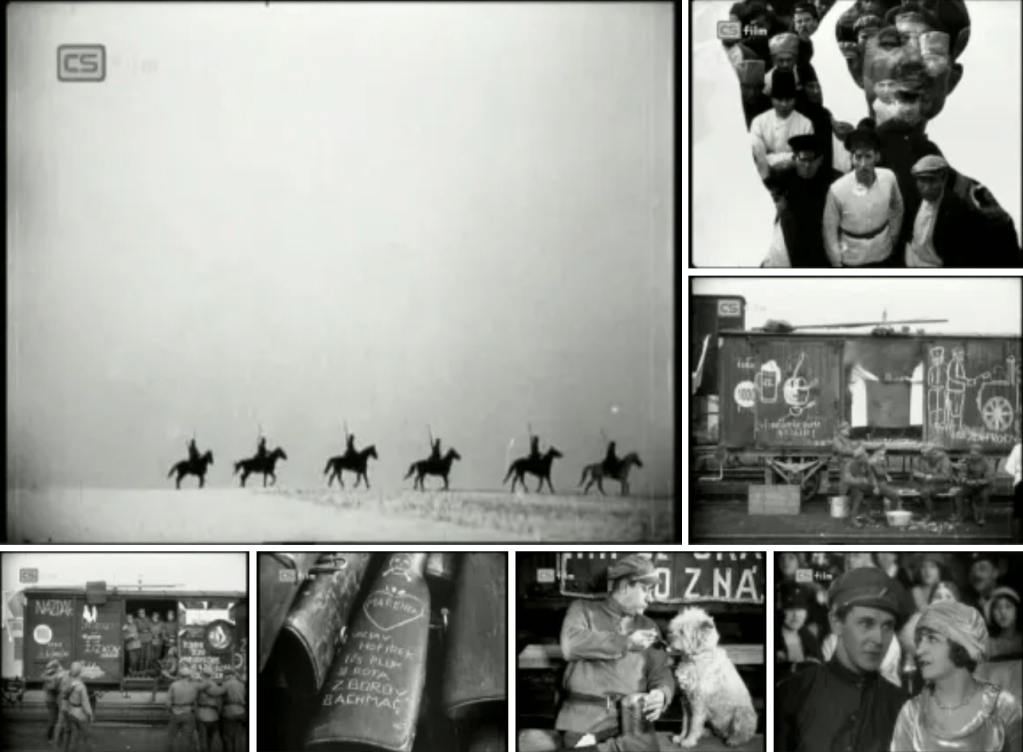
Švec emerges as a remarkably well-drawn character, portrayed with real complexity and humanity—qualities not always present in Czech silent cinema. Over two hours, much of it dedicated to the chaos of battle, the film conveys both the despair and resilience of men stranded in hostile territory, struggling through their own anabasis that can only conclude with their leader’s death. A subplot worth noting is that of Marie Ivanovna, a young woman who disguises herself to join the legion out of love, fighting to the death alongside the man she adores. It’s a familiar trope, yes, but here it’s handled with sincerity and pathos.

Innemann’s direction elevates the material, his careful framing and attention to detail giving the film a striking visual texture. As a lifelong enthusiast of war films and memoirs—especially those tied to the First World War—I was deeply impressed by Plukovník Švec. Compared to many silent war films, it feels unusually mature, perhaps due to its relatively late release in 1930. I’d even go so far as to say that, along with Abel Gance’s J’accuse (1919), it might be my favorite silent war film. Its true power lies not in spectacle, but in its focus on the men themselves: their struggles, their humanity, and their refusal to give in against impossible odds. Watching the legion’s march through Russia, I couldn’t help but think of the doomed retreat of Italian troops from the same front in the next world war.
If you’re drawn, as I am, to war films or personal accounts of conflict, I can’t recommend Plukovník Švec highly enough. The lack of translated intertitles is a hurdle, but the story and its extraordinary images more than speak for themselves—it’s absolutely worth seeking out.
This article was originally published in Italian on emutofu.com




 Silent Film Era
Leave a comment