

Throughout this series, we’ve seen how many early Czech productions were devoted to national figures—heroes and saints who could embody the country’s identity and, not least, serve propagandistic purposes. It comes as no surprise, then, that among these films we find one dedicated to Saint Wenceslas, Duke of Bohemia, whose chapel still stands in St. Vitus Cathedral in Prague (Katedrála svatého Víta, Václava a Vojtěcha).
The film recounts the life of Wenceslas I, Duke of Bohemia (Zdeněk Štěpánek), raised a Christian despite his mother Drahomíra (Dagny Servaes) belonging to a pagan tribe. Much of the narrative centers on court intrigues: following the death of King Vratislaus (Jiří Steimar), Wenceslas’s grandmother Ludmila (Vera Baranovskaja) assumes the regency. Later, tensions flare between Wenceslas and his brother Boleslav (Jan W. Speerger), who covets power and resents him even more because the woman he loves, Rudmilla, has feelings for Wenceslas instead. Consumed by hatred, Boleslav ultimately murders his brother. Yet Wenceslas “conquers death,” remembered by his people for his kindness and sense of justice. His martyrdom and the devotion he inspired would earn him sainthood. According to legend, he knew his death was near but accepted it, believing his sacrifice would serve his people better than his continued life.
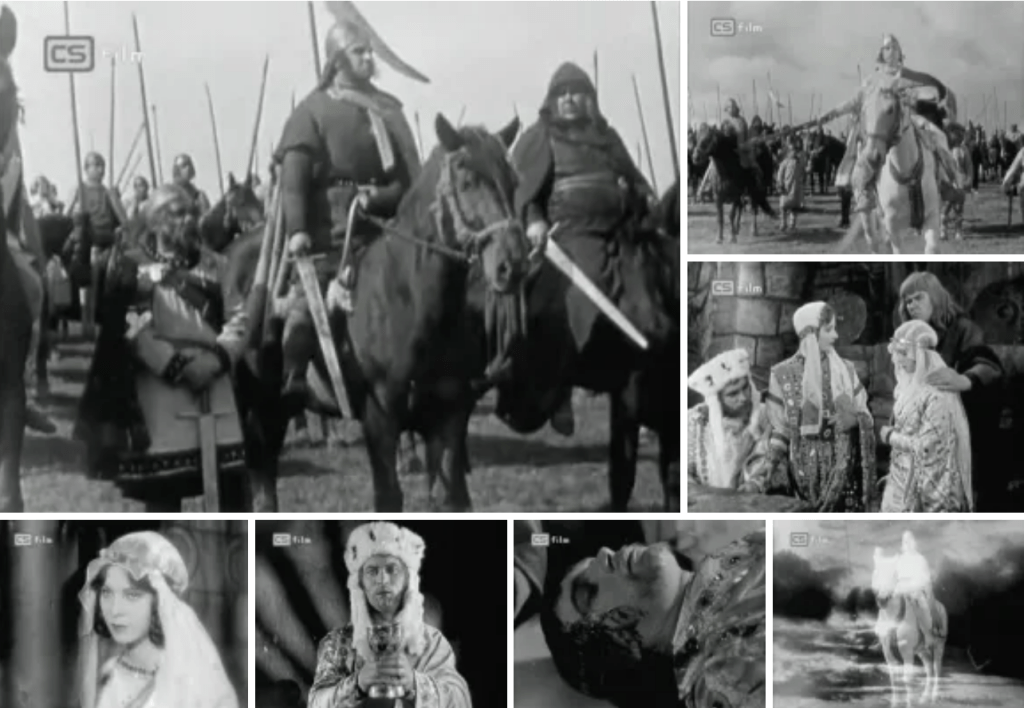
The production clearly required a significant investment: vast crowds of extras, elaborate sets, and richly detailed costumes. Despite all this grandeur, Svatý Václav is very far from my taste, and I have to admit the nearly two-hour runtime felt like an ordeal. The portrayal of such a flawless, saintly figure locked in battle against pure evil and endless court scheming simply isn’t the kind of story I find compelling.
This article was originally published in Italian on emutofu.com



 Silent Film Era
Leave a comment