
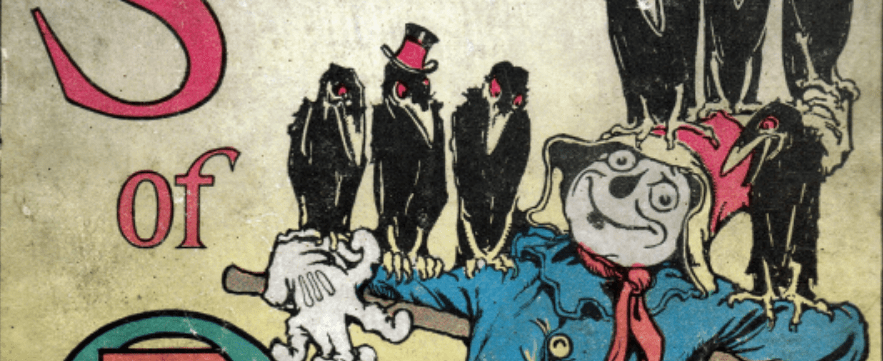
We are used to films being adapted from books, or, at most, to novels and films being developed side by side, as happened with 2001: A Space Odyssey, written and scripted by Arthur C. Clarke. His Majesty, the Scarecrow of Oz is a rather unusual case, because L. Frank Baum — the creator of the Oz saga as well as producer and screenwriter for his own Oz Film Manufacturing Company — first created the cinematic version in 1914 and only a year later adapted it into a prose narrative titled The Scarecrow of Oz.
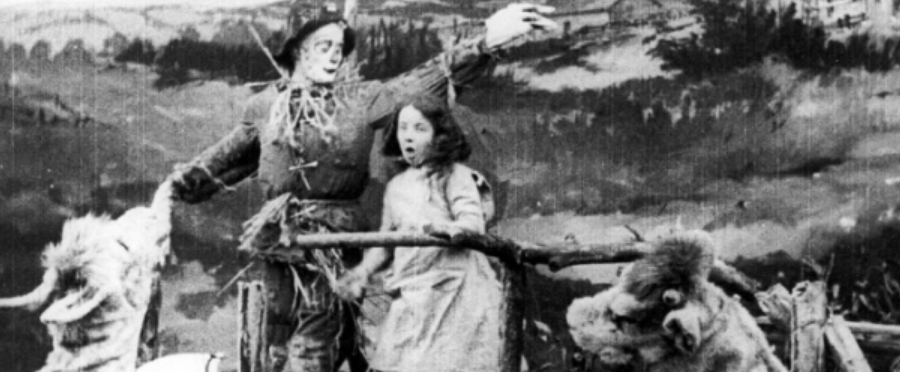
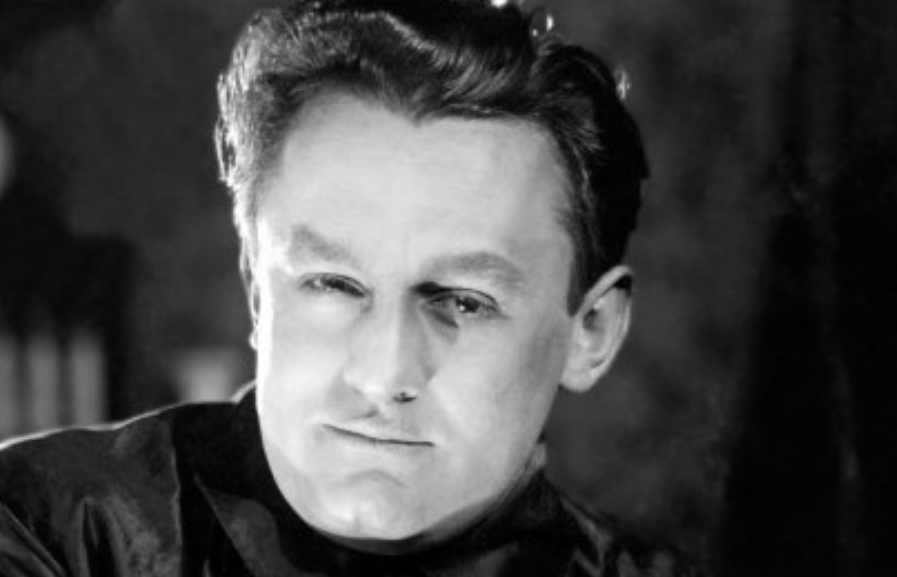
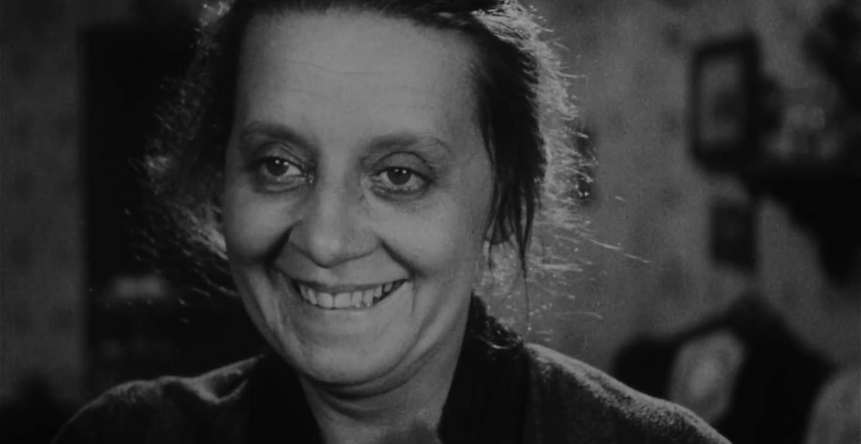
Lacking the film rights to his earliest Oz books, Baum attempted a sort of fresh start with this production, reintroducing the main characters and placing them within an entirely new story. We thus encounter Dorothy (Violet MacMillan), the Cowardly Lion (Fred Woodward), the Tin Woodman (Pierre Couderc), and the Scarecrow (Frank Moore), all caught up in the unhappy fate of the Kingdom of Jinxland. There, the wicked King Krewl (Raymond Russell) rules with an iron hand and seeks to force Princess Gloria (Vivian Reed) into marriage with a suitor of his choosing, rather than allowing her to wed her beloved gardener Pon (Todd Wright). To crush this forbidden love, Krewl turns to the witch Mombi (Mae Wells), who freezes Gloria’s heart. Deprived of all feeling, the princess rejects both Pon and the unwanted suitor alike. At this point, our heroes decide that the time has come to overthrow the tyrant. King Krewl is deposed, the Scarecrow is briefly placed on the throne (as in the original Oz tradition), and finally Gloria—once cured—is restored as the rightful ruler.
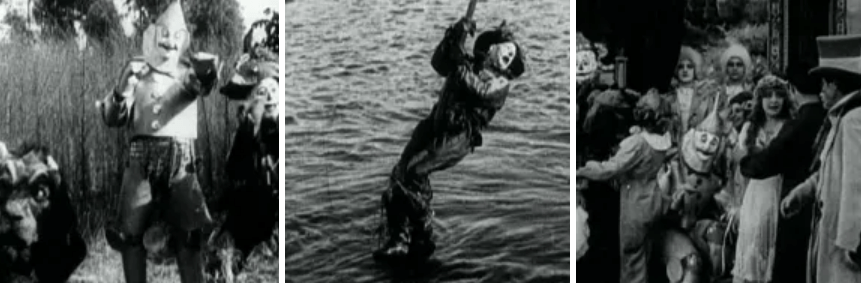
Compared to the other films discussed so far, the story is fairly enjoyable, even if the Scarecrow behaves much like the Patchwork Girl did in the previous film—though in a slightly less extreme manner: he never stays still for a second. Capturing a single usable frame for the article sometimes felt like a genuine challenge. As expected, the film differs significantly from the novel. In the book, the main protagonists are the young girl Trot and Captain Bill, assisted by the eccentric Orphan (often referred to as the “strange creature”). Of the classic Oz characters, only the Scarecrow plays a direct role, acting as an emissary sent by Queen Ozma herself to resolve the dire situation in Jinxland. Ozma, in fact, follows the events “as if watching a motion picture,” together with Dorothy, before deciding to intervene. For further details on the literary version, I refer readers to the Burzee blog, from which I have also taken the image of the book’s cover.
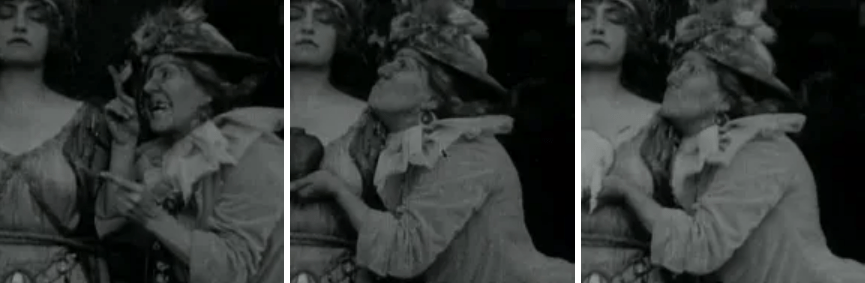
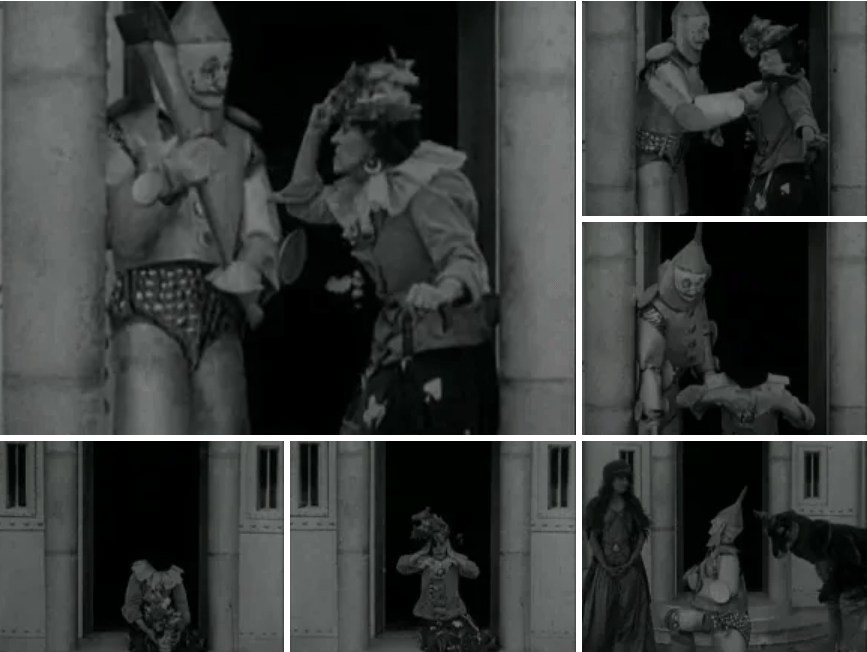
As in The Patchwork Girl of Oz, the film features some visually charming moments, such as the scene in which Mombi freezes Gloria’s heart (see above) or the one in which the Tin Woodman cuts off the witch’s head (see below). There is also an underwater sequence involving the Scarecrow, who becomes stuck at the center of a lake. The acting is somewhat less exaggerated than in the two earlier films discussed, and overall I found it easier to watch. The mischievous equine character also returns here, by now a recurring presence since the very first 1910 adaptation.
Among the Oz adaptations examined so far, His Majesty, the Scarecrow of Oz is certainly the most successful, even though it still retains those buffoonish elements that, unfortunately, characterize much of the silent-era Oz productions.
This article was originally published in Italian on emutofu.com




 Silent Film Era
Leave a comment