

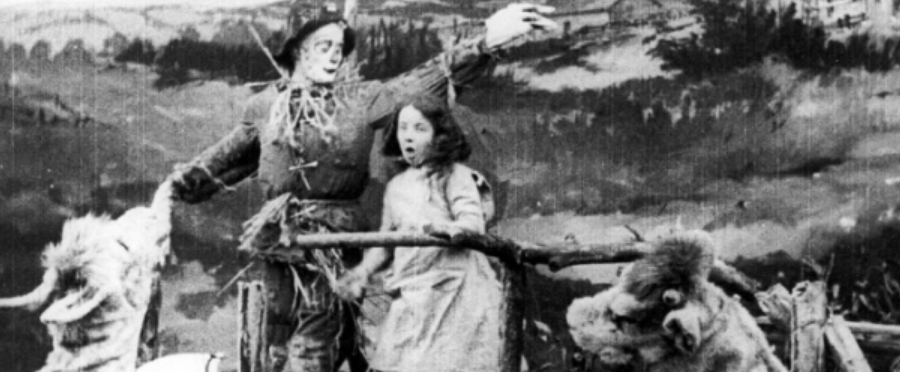
I’ve said it many times: period dramas are usually not my cup of tea. And yet, Jánošík — the only surviving Slovak silent film, as far as I know — is fascinating for several reasons. Let’s start with its production. The film was financed by the Tatra Film Corporation, a company founded in Chicago by a Slovak-American community. Among its founders was Daniel Siakeľ, brother of the director, who had previously worked for Selig Polyscope — the Chicago-based studio that distributed early films with Harold Lloyd, Colleen Moore, and “Fatty” Arbuckle. If the name rings a bell, it’s because we mentioned them in connection with The Wonderful Wizard of Oz (1910) by Otis Turner, also produced by Selig before Baum, for financial reasons, sold the film rights to his creation. The project was produced by Ján Závodný, another Tatra Film co-founder, while direction went to Jaroslav Siakeľ, just 25 years old and living in America for about a decade. The Siakeľ brothers decided to shoot the film back home in Slovakia, near Blatnica, their birthplace. Some scenes were also filmed at A-B Film Studios in Prague, but the overall spirit of the film is undeniably Slovak. After all, Jánošík is a Slovak national hero — a Robin Hood figure who robs the rich to give to the poor, defying the oppressive Austro-Hungarian lords. The lead role was entrusted to Czech actor Theodor Pištěk, while most of the cast consisted of local non-professionals. Among them was the female lead, Mária Fábryová, long misidentified in some sources as the wife of poet Pavol Országh Hviezdoslav (in fact, it was his sister Ilona/Helena Országhová).
Two prints of the film were made: one remained in Czechoslovakia but was lost, while the other was brought to the United States. Decades later, producer Ján Závodný rediscovered it in his Chicago garage and donated it to the Slovak Film Institute (SFU).
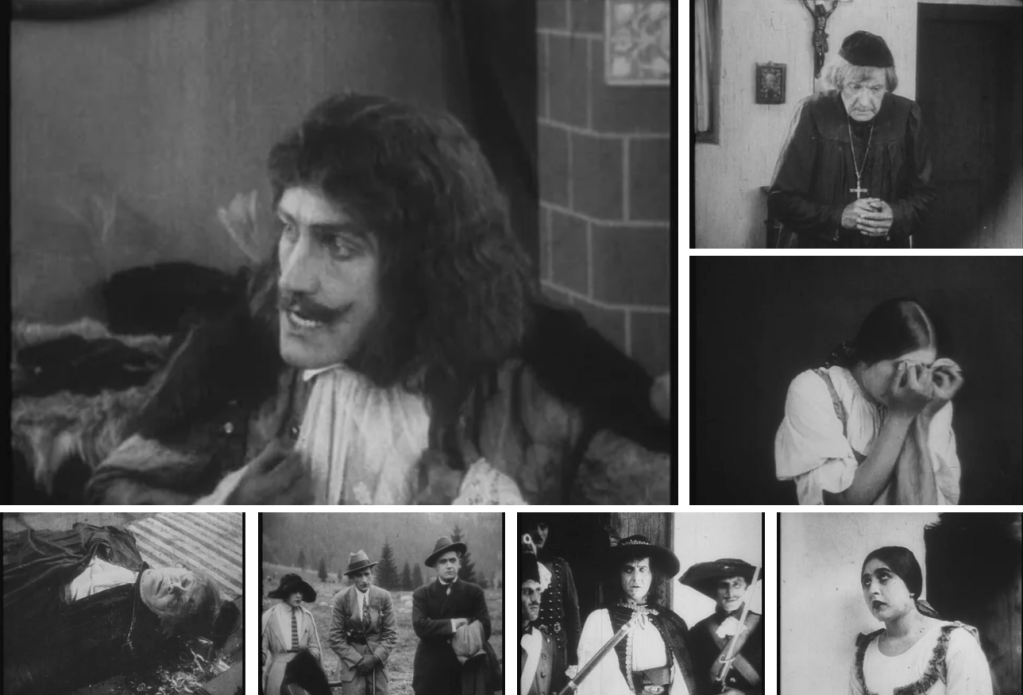
Count Šándor (Vladimír Šrámek) exploits the local villagers, forcing them into relentless labor. Juraj Jánošík (Theodor Pištěk), a young seminarian, returns home to find his mother dead. His father, punished for skipping work, is beaten to death by the guards. Swearing revenge, Jánošík abandons his religious path and joins a band of outlaws led by Hrajnoha (P. Kutný), quickly rising to leadership. Meanwhile, Count Šándor repeatedly tries to assault Anička (Mária Fábryová), who takes refuge with a local priest (František Horlivý) — only for the priest to be killed during a raid. Jánošík soon becomes a folk hero, stealing from the count to aid the poor. But his fate is sealed: betrayed, captured, and sentenced to a gruesome death, he is hanged by his left rib and then quartered. The film clearly reflects the director’s inexperience — overall, it’s not an outstanding piece of cinema and fits squarely within the nationalist trend of early local productions. Compared to similar films from the same era, Jánošík would probably come out on the losing side.
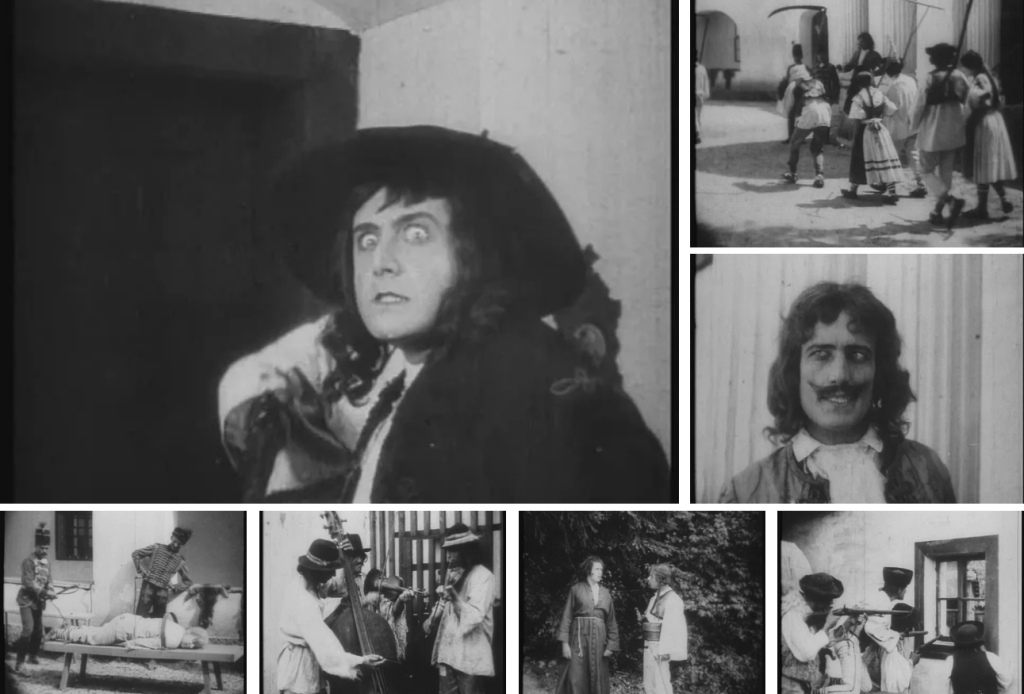
That said, Theodor Pištěk makes a convincing Jánošík, while Vladimír Šrámek delivers a suitably detestable Count Šándor. The rest of the cast is fairly anonymous, and the action lacks the flair and precision of, say, a Douglas Fairbanks adventure. Battle scenes and crowd sequences are decent but rarely thrilling. Still, the film pays great attention to rural landscapes, and there’s a certain amateur charm to its execution. In the end, Jánošík is both a piece of Slovak history and a film of limited cinematic appeal. Not an unmissable masterpiece, but far from a bad film — and certainly worth watching as a cultural milestone and as a glimpse into one of Slovakia’s most legendary folk heroes.
This article was originally published in Italian on emutofu.com




 Silent Film Era
Leave a comment