-
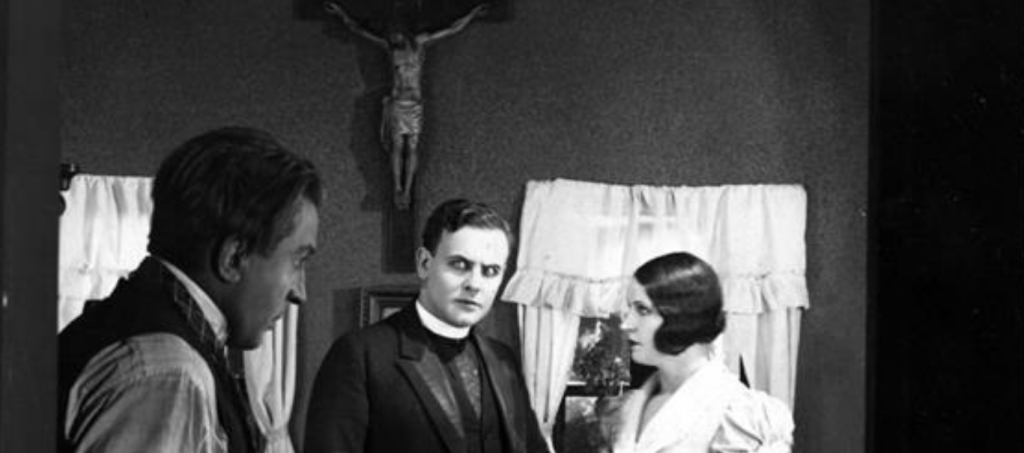 Continue reading →: Father Vojtěch (Páter Vojtěch) – Martin Frič (1928)
With Páter Vojtěch we return to the kind of drama I most enjoy, and I must say that despite its religious framework, I was pleasantly surprised by the film. We recently discussed Otec Sergij, centered on a man of faith battling temptation, and while Frič’s film shares some similarities, the…
-
 Continue reading →: Erotikon – Gustav Machatý (1929)
Often hailed as the masterpiece of Czech silent cinema, Erotikon did not disappoint me in the slightest. While the story itself might not strike one as particularly original, what makes the film extraordinary is the way it is shot and the depth with which the actors inhabit their characters. Standing…
-
 Continue reading →: Poor Girl (Chudá holka) – Martin Frič (1929)
The very title Chudá holka (“Poor Girl”) already hints at the genre and storyline and you would not be mistaken. Based on the novel of the same name by Václav Čech-Stráň, the plot is rather conventional and heavily influenced by foreign—particularly Russian—literature. Fortunately, Martin Frič’s direction elevates the material: through…
-
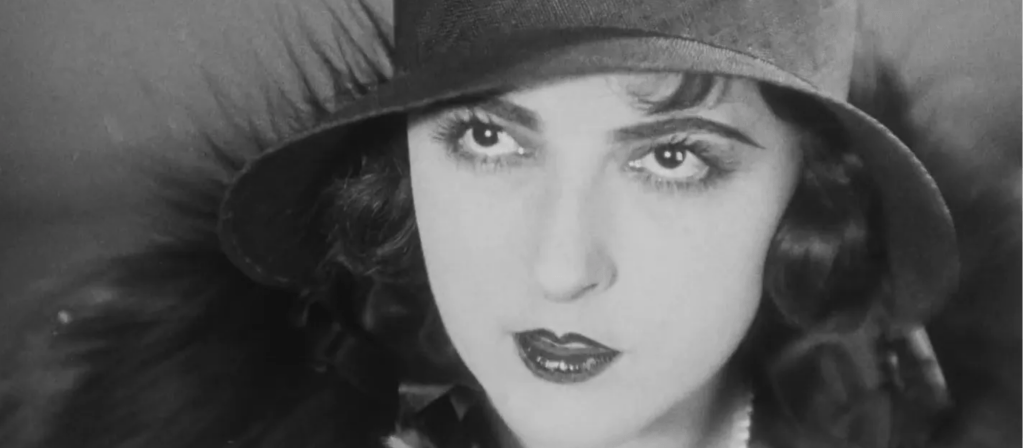 Continue reading →: Sin of a Beautiful Woman (Hříchy lásky) – Karel Lamač (1929)
Among the films released by the NFA for the Season of Classic Films is Karel Lamač’s Hříchy lásky. In some respects, it reminded me a lot of the Danish Klovnen or Varieté and other films of that type. The story is far from original, revolving around the theatrical world and…
-
 Continue reading →: For the Czechoslovak State (Za československý stát) – Vladimír Studecký (1928)
Ten years after the founding of the Czechoslovak state, this propaganda film was produced to tell a story little known in Italy: that of the Czechoslovak Legions, who joined the Entente in the hope—eventually fulfilled—that the defeat of the Austro-Hungarian Empire would bring independence. With the backing of intellectuals such…
-
 Continue reading →: Three Czechoslovak Silent Documentaries and…
In this article, we take a journey from the capital, Prague, to the more remote areas of today’s Czech Republic and Slovakia, guided by the sensitivity of Svatopluk Innemann, already familiar to us through this project, and Karel Plicka. At the end, you’ll also find a fascinating little experimental bonus.…
-
 Continue reading →: Eva’s Daughters (Dcery Eviny) – Karel Lamač (1928)
Dcery Eviny is the last Czech silent film made by the duo Karel Lamač and Anny Ondra before they both moved to Germany. Ondra, in particular, would go on to enjoy a successful stint in British cinema under Alfred Hitchcock (see our dedicated project on the site). This is a…
-
 Continue reading →: Blednoucí romance: A Film to Save the Past
We’ve already touched on a part of Blednoucí romance (1958) when we began the project dedicated to Czech and Slovak silent cinema with Song of Life (Píseň života, 1924). To understand the importance of this film, one must consider the post-war context: many films had been destroyed during the conflict,…
-
 Continue reading →: An Old Gangster’s Molls (Milenky starého kriminálníka) – Svatopluk Innemann (1927)
Milenky starého kriminálníka is one of the most playful and spirited silent comedies I have ever seen, featuring an absolutely stunning Anny Ondra in an atypical role for her. The protagonist is a fearless, tomboyish young woman who delights in mischief for the thrill of it. The film partially subverts…
-
 Continue reading →: The Kreutzer Sonata (Kreutzerova Sonáta) – Gustav Machatý (1927)
Today’s film takes inspiration from one of Tolstoy’s lesser-known novels, The Kreutzer Sonata. The story is fairly traditional, centering on a man, Pozdnyšev, and his intense jealousy toward his wife, with whom he has a complicated relationship. From what I have seen of the plot, this adaptation seems reasonably faithful…

Join Silent Films!
Stay updated with our latest articles by joining our newsletter.



 Silent Film Era