

In these articles, we often come across figures who played a crucial role in shaping Czech national identity. Šachta pohřbených ideí gives us the chance to talk about one such figure: Petr Bezruč, a celebrated Czech poet best known for his Silesian Songs (Slezské písně), first published in 1909 and expanded in later years. Much of Bezruč’s work dealt with social issues, and this film is directly inspired by one of his poems, Ostrava (you can find an English translation here).
The plot is rather intricate — and, as with other silent films, I had to rely on the synopsis provided by the Czech Feature Film database (CFF) to fully follow the story. The intertitles are unusually verbose, which didn’t help given my very basic Czech.
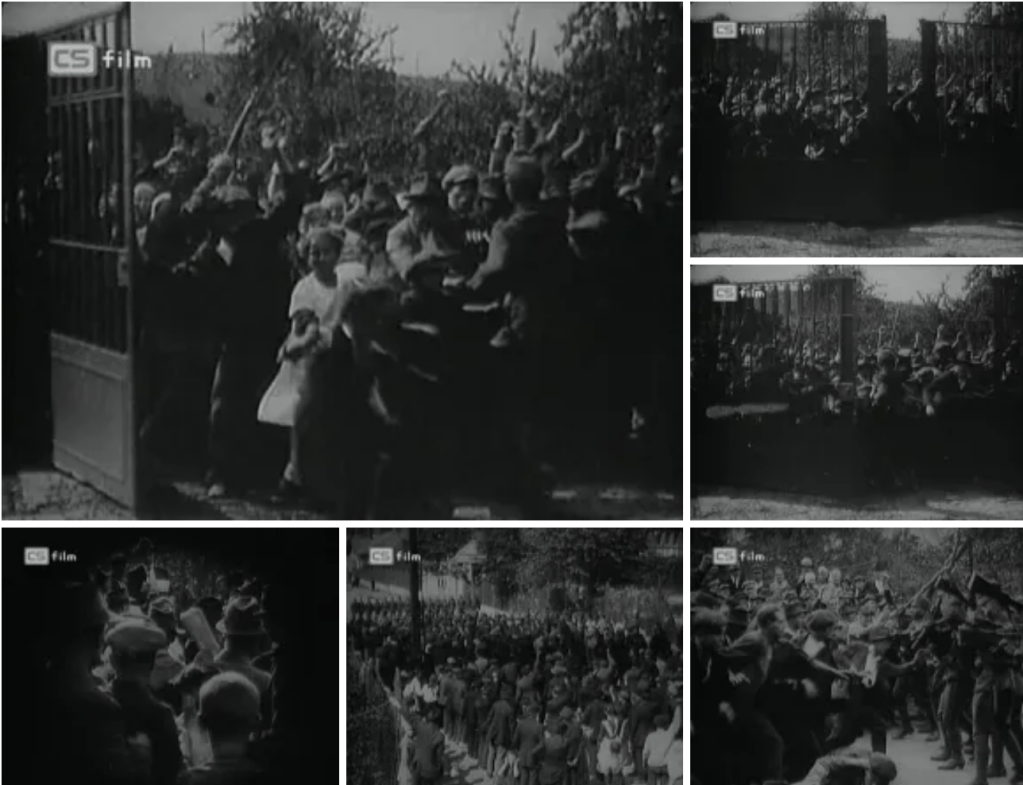
Set during the Austro-Hungarian Empire, the story follows engineer Oblomoský (Anatol Montalmare), who becomes the owner of a coal mine. During a workers’ strike, a miner named Havlena (Eduard Bartoš) is badly injured and dies, leaving behind a widow. Years later, still haunted by the tragedy, Oblomoský befriends a young socialist engineer, Skála (Antonín Ludvík Havel), who dreams of turning the mine into collective state property. Meanwhile, industrialist Kohlmann (Eduard Ševčík) schemes to take over the mine and exploit it for his own gain. Backed by his powerful Rothschild connections, he sends gendarmes to brutally force the miners back to work and even arranges a sabotage within the mine, using Macháček (Rudolf Myzet), a miner turned overseer shunned by his fellow workers. War eventually breaks out, Oblomoský dies, and Kohlmann seizes control. His triumph is short-lived, however: with the birth of the new Czechoslovak Republic, the mines are confiscated and nationalized, turning the miners into state employees and freeing them from the grip of unscrupulous capital.
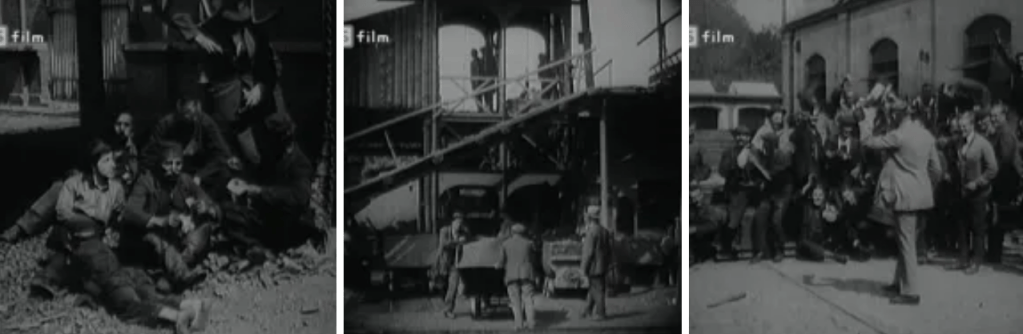
Šachta pohřbených ideí is notable as the first socially themed film produced in Czechoslovakia, reflecting the wave of socialist cinema that emerged across Europe in the aftermath of the 1917 Revolution. Comparable examples include the Hungarian Bánya titka (1918), the Norwegian Revolutionens Datter (1918), and Christian Wahnschaffe (1920–21), which was screened at Il Cinema Ritrovato in 2018. Initially censored upon its 1921 release, the film was only made public after a new edit. Unlike in other countries, the socialist message here is presented without overt condemnation. This likely stems from the political climate of the young Czechoslovak state: the narrative celebrates the miners’ eventual victory, achieved through nationalization.
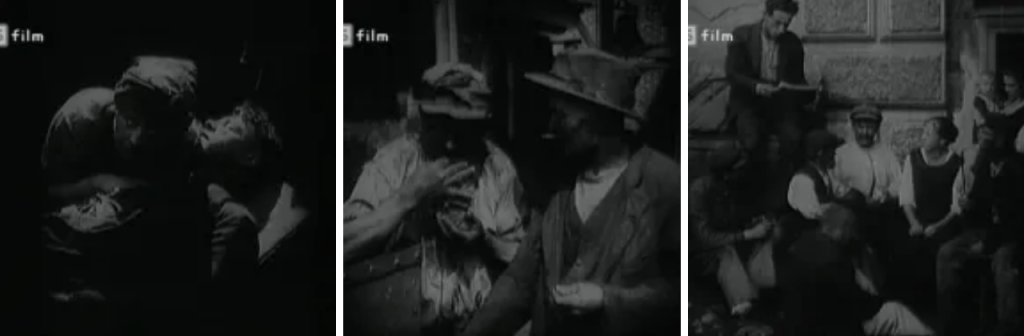
What impressed me most were the crowd scenes and the almost documentary-like realism — shots of miners at work, clashes with the military, confrontations with the owners, and tense underground meetings. The poster highlights one particularly powerful sequence: after a sabotage carried out by Macháček, miners flee en masse, carrying the wounded with them.
Overall, I really enjoyed this film. It tackles social themes without the sense of post-revolutionary gloom often found elsewhere. Even among the negative characters, there is a sense of humanity and a genuine desire for justice that drives the revolutionary action. Of course, one suspects that the rebellion succeeds on screen largely because it aligns with the aims of the state: nationalization as the path to fairness and equality. The film’s socialism feels worlds apart from the Soviet model, suggesting either the filmmakers’ intent or perhaps the influence of censorship. But watching it today, one cannot help but read its message through a different lens.
This article was originally published in Italian on emutofu.com



 Silent Film Era
Leave a comment