
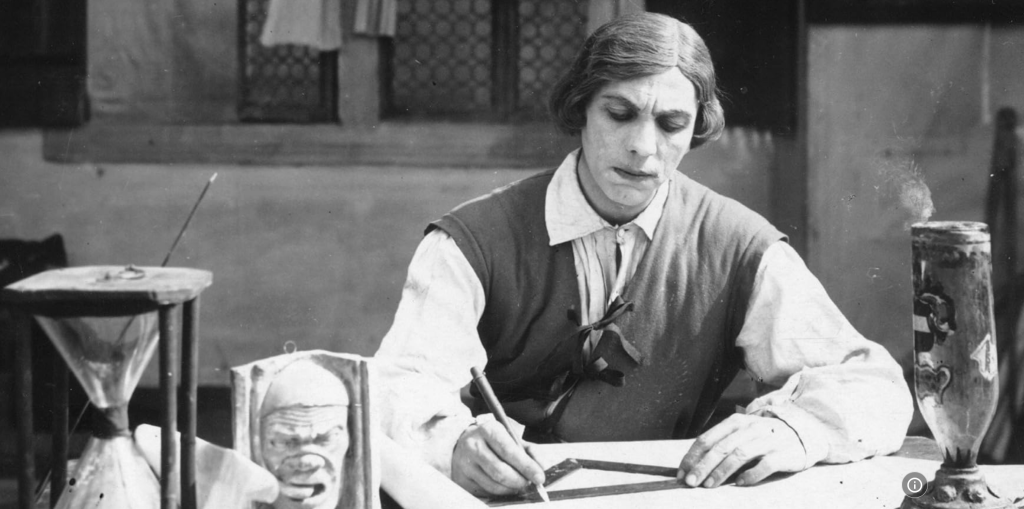
In 1919, the newly born Czechoslovakia felt the need to reinforce the symbols of its national identity. Cinema, too, joined this effort with a film about the creation of one of Prague’s most emblematic monuments: the neo-Gothic Cathedral of St. Vitus. Its construction had a long and troubled history, beginning in 1344 and finally completed in 1929 with the contribution of, among others, Alfons Mucha, who was deeply committed to strengthening his country’s cultural identity. The cathedral’s first architect was Matthias of Arras, succeeded after his death by Peter Parler. While initially following Matthias’s plans, Parler soon introduced his own bold innovations—such as the extraordinary ribbed and net vaults, along with flying buttresses—that would later spread as far as Germany. It is this almost legendary figure, who worked under Emperor Charles IV of Luxembourg, that the film dramatizes.
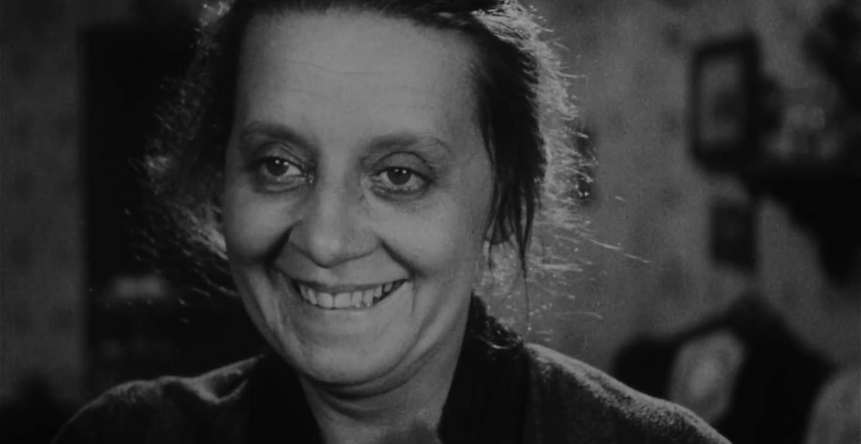
Petr (Rudolf Deyl) is portrayed as a young foreign architect who presents Emperor Charles IV (Jakub Seifert) with new designs for the cathedral. His success sparks the envy of three local master builders (Jaroslav Hurt, Florentin Steinsberg, and Karel Vána), who try to unsettle him by suggesting that his vaults might not hold. Though Petr initially finds comfort in the love of the beautiful Alena (Eva Vrchlická) and the support of her father (Karel Kolár), fear soon consumes him. Haunted by the possibility that his structure might collapse, Petr makes a pact with the devil (Jaroslav Hurt) and loses his sanity. When his builders rebel, terrified that the cathedral will fall once the scaffolding is removed, Petr locks himself inside and sets it ablaze. He manages a desperate escape, only to die by falling into a ravine. Yet while his life ends tragically, the monument itself miraculously survives intact, destined to stand for centuries.
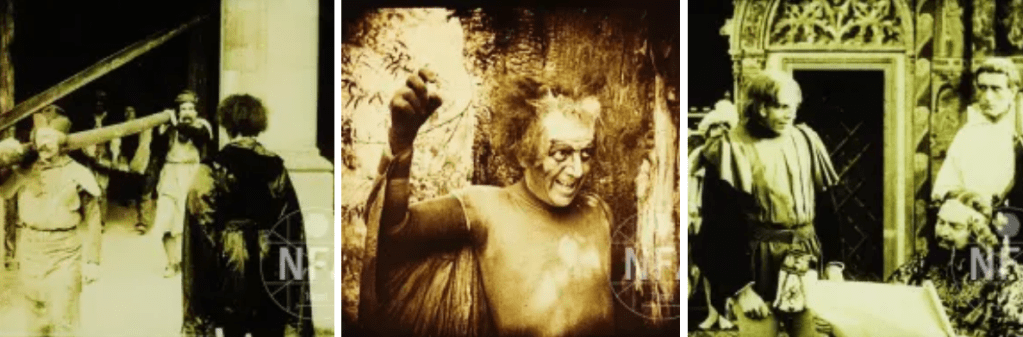
The real Peter Parler, of course, did not die in such a dramatic fashion. He lived almost to the age of seventy and was laid to rest in the very cathedral he helped build. Despite its brevity, Stavitel chrámu evoked for me the atmosphere of contemporary German productions (such as The Student of Prague) and is distinguished by carefully designed costumes and performances that are, overall, convincing.
Ultimately, The Cathedral Builder reflects the cultural climate of Czechoslovakia at the time: after decades of growing national identity and pride, there was a pressing need to reinforce it. This meant not only celebrating existing monuments, as in this film, but also creating new works of grandeur that could attract the attention of foreign audiences, just as Mucha’s Slav Epic later did. It feels fitting, then, that our first foray into Czech cinema should begin with a film about the birth of one of Prague’s most enduring symbols: the Cathedral of St. Vitus.
This article was originally published in Italian on emutofu.com




 Silent Film Era
Leave a comment